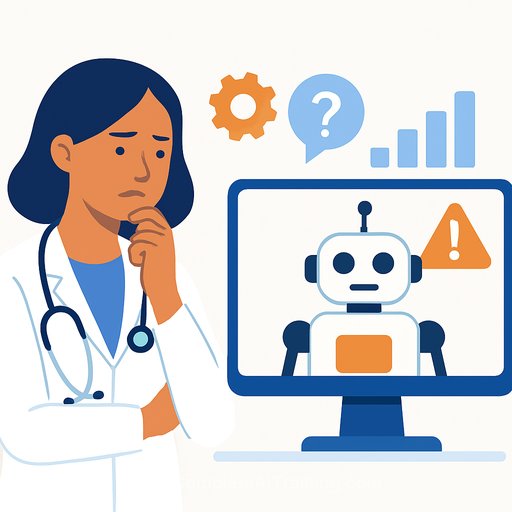
Why AI tests clinician trust-and how providers are responding
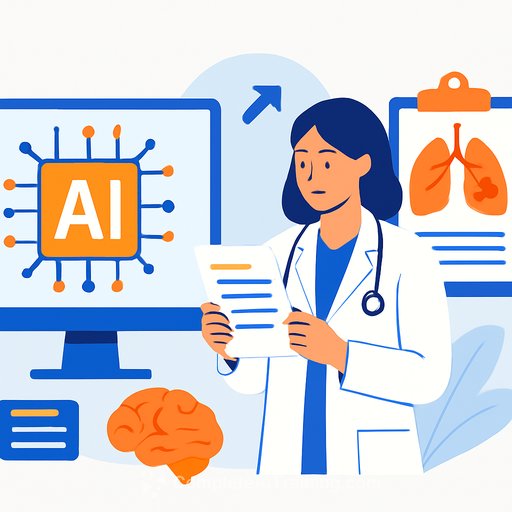
Healthcare providers are grappling with a fundamental problem: clinicians don't trust the AI tools their organizations are deploying.
The tension centers on a basic question. When an AI system recommends a diagnosis or treatment, how do doctors know it's right? Unlike traditional software with transparent logic, many AI models operate as "black boxes." Clinicians can see the output but not the reasoning behind it.
This opacity creates friction. Doctors trained to explain their clinical decisions to patients and peers struggle when they can't explain why an algorithm reached its conclusion. Some clinicians simply ignore AI recommendations they don't understand, undermining the investment their hospitals made in the technology.
Where the trust gap shows up
The problem appears across clinical workflows. Radiologists question AI-assisted image analysis. Emergency physicians hesitate over AI triage recommendations. Pathologists wonder whether an AI system flagged the right cells.
Hospitals report that clinician adoption lags behind technical capability. Systems work in testing but underperform in actual use because doctors default to their own judgment rather than trust unfamiliar algorithms.
How providers are building confidence
Leading health systems are taking concrete steps to address skepticism. They're requiring AI vendors to document how systems reach conclusions. They're running head-to-head comparisons between AI recommendations and clinician diagnoses. They're involving doctors in testing before rollout rather than imposing tools from above.
Some organizations are investing in staff training on how AI works and what it can and cannot do. Others are starting with lower-stakes applications-administrative tasks or screening tools-before moving to high-consequence clinical decisions.
The most effective approach combines transparency with accountability. Hospitals that publish their AI validation data internally and track real-world performance see higher clinician buy-in than those that treat AI as a black box to be implemented and forgotten.
Trust in AI tools isn't automatic. It's earned through evidence, explanation, and the willingness to let clinicians understand what they're working with.
Healthcare professionals looking to deepen their understanding of AI systems and their applications can explore AI for Healthcare resources.
Your membership also unlocks: