Is Construction Finally Becoming a Tech Industry?
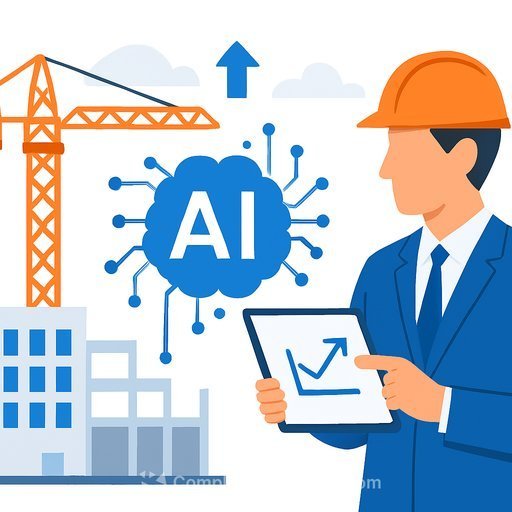
Artificial intelligence is moving from buzzword to jobsite utility. It helps teams make sharper decisions, cut waste, improve safety, lower risk, and control costs. Yet while many managers feel their firms are keeping pace with tech awareness, a large share still reports no real AI use. That gap is where projects lose time, money, and momentum.
As one industry expert put it, construction needs a new perspective on planning and operations-one that treats AI and related tools as core to how work gets done, not as side projects. The contractors who act now will pull ahead. The ones who stall will feel it in bid competitiveness, margins, and recruiting.
Where AI Already Delivers Value
AI is not theoretical for builders. It's already practical in four high-impact areas.
- Project management: Forecast schedule slippage, model risk, flag delayed submittals, and tighten cost-to-complete estimates. Think fewer surprises and tighter controls.
- Design and updates: Speed model iterations, spot clashes early, automate takeoffs, and sync design changes to procurement and field plans.
- Safety and prevention: Use computer vision to detect PPE noncompliance and unsafe conditions, and surface patterns tied to incidents so you can act before they happen.
- Quality and maintenance: Monitor equipment and building systems to predict failures, reduce rework, and improve closeout packages.
For a broader view on where tech is improving outcomes across construction, see this industry analysis from McKinsey The next normal in construction.
What's Slowing Adoption
The blockers are familiar: unclear ROI, a skills gap, fragmented data, too many vendors, and change fatigue in the field. None of these are deal-breakers. They just need executive ownership, a clear plan, and proof through small wins.
Five Moves You Can Make This Quarter
- Put a tech/AI leader on the executive team. Many firms "don't know what they don't know." Give a seasoned technology leader real authority over strategy, operations, and budgets, and consider an AI Learning Path for VPs of Strategy to align executive governance and planning.
- Bake technology into strategic planning. Treat AI as a core capability, not a pilot that never ends. Define priorities, workflows, and data standards upfront with field input.
- Fund it like you mean it. Innovation cycles move fast. The investment pencils out when you count fewer delays, tighter estimates, and lower risk. Done right, tech pays for itself.
- Win employee trust with clear messaging and training. Explain the "why," show the benefits, and upskill teams so the tools actually help them. Confidence beats resistance.
- Turn tech into a client-facing differentiator. Buyers want fewer change orders, better safety, and predictable schedules. Make your methods part of your bid story and interviews.
If you plan to upskill teams by role, this curated list can help: AI courses by job.
How to Run a Practical Pilot
- Pick one stubborn problem: schedule risk, RFI cycle time, safety observations, or takeoffs.
- Form a small squad: a PM, superintendent, estimator, IT/tech lead, and one engaged subcontractor.
- Set success metrics: e.g., 20% faster submittal approvals, 30% more accurate cost forecasts, or 25% more safety observations.
- Integrate with current tools and workflows; avoid shadow systems.
- Run 60-90 days, document results, standardize what worked, and roll it to the next two projects.
What Good Looks Like in 12 Months
- Schedule variance reduced by 1-3% across active jobs.
- Cost forecast accuracy improved by 2-5% with earlier risk flags.
- Recordable incidents down; more near-miss data captured and acted on.
- Rework reduced through earlier clash detection and quality checks.
- Faster pay apps and change-order visibility through cleaner data flow.
- A common data structure that connects estimating, planning, field, and closeout.
The Competitive Angle
Technology is now part of precon. Owners ask about your data, your process, and your safety results. If your team can show better predictability with real project evidence, you'll win more work and protect margin in execution.
The Bottom Line
Construction is moving toward tech whether we like it or not. The firms that act decisively-leadership, planning, funding, adoption, and marketing-will set the new baseline for safety, speed, and cost control. Start small, prove value, scale fast.
About Resolution Management Consultants, Inc.
Resolution Management Consultants (RMC) is a nationally recognized consulting firm based in Marlton, NJ. The team supports construction planning and management to help clients build more successful projects, and provides dispute resolution services, including expert analysis and testimony when matters proceed to litigation. Since 1993, RMC has assisted private owners, public agencies, and contractors in achieving project goals or resolving disputes among contracting parties.
Your membership also unlocks: