UNESCO and Diskominsa Co-Create AI Literacy Workshop in Aceh: What PR and Communications Teams Should Know
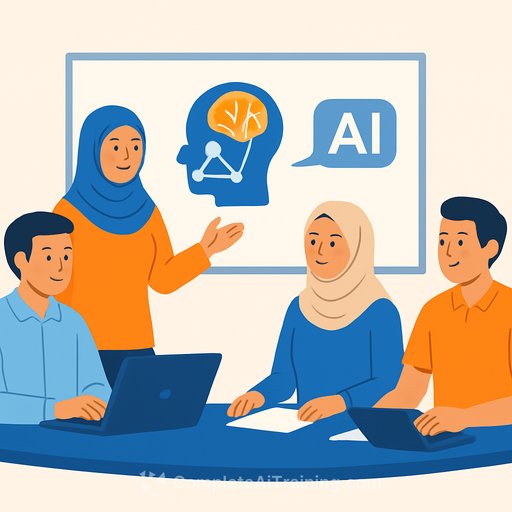
Thirty civil servants took part in a co-creation AI literacy workshop in Banda Aceh on 15-17 October. Led by UNESCO experts with support from the Communications, Information and Crypto Office, Aceh (Diskominsa), the training centered voices outside the Jakarta metro area and focused on practical use in public service.
This marks the second engagement with Acehnese partners on ethical AI. In 2024, Indonesia's national AI assessment used UNESCO's methodology, and the first of five regional policy consultations was held at Universitas Syiah Kuala in Banda Aceh. Participants emphasized the urban-rural competency and access gap, and called for tighter national coordination.
Why this matters for PR and Communications
- Clear narrative: Government is building AI skills responsibly, with regional inclusion and follow-through on policy recommendations.
- Proof that travels: 30 civil servants trained, eight learning modules, two international experts, feedback loop into civil service training.
- Regional focus: Storyline extends beyond Jakarta, which plays well for local media and community stakeholders.
- Policy continuity: Workshops connect directly to the national AI readiness effort and upcoming ministerial briefings.
Workshop highlights
- Eight modules covering types of AI systems, risks and opportunities in public service, and global/regional governance frameworks (e.g., principles like the OECD AI Principles).
- Use-case discussions for Indonesia and structured feedback on course content for future integration into civil servant training.
- Delivered by Dr. Hammam Riza (Indonesia) and Dr. Aini Suzana binti Ariffin (Malaysia), members of UNESCO's AI Experts without Borders network.
- Participation from the Coordinating Ministry for Human Development and Cultural Affairs (Kemenko PMK).
Government perspective
According to Vassa Mustikahati from Kemenko PMK, the training strengthens the government's ability to use AI responsibly for better policy design across sectors. It reinforces cross-sector collaboration and keeps adoption ethical, inclusive, and focused on improving people's wellbeing-while valuing UNESCO's role in building civil service capacity.
What's next
Following this pilot, UNESCO will bring together ministerial AI stakeholders in Jakarta on 27-28 October 2025 to introduce the AI literacy training and other capacity-building initiatives to a wider audience.
Message house for your announcements
- Core message: Ethical AI skills for civil servants, developed with local input, to improve public services across Indonesia.
- Support: Co-creation approach, attention to the urban-rural gap, and alignment with national AI readiness recommendations.
- Outcome: Practical modules, real use cases, and a pathway to embed content in civil servant training frameworks.
Suggested quotes (for press notes and spokespeople)
- "This workshop brings regional voices into AI capacity-building, so public services work better for everyone-no matter their postcode."
- "By focusing on responsible, inclusive use of AI, we're building confidence, clarity, and coordination across government teams."
Media angles you can pitch
- From policy to practice: how AI readiness work is moving into training for front-line civil servants.
- Banda Aceh's role as a regional hub for ethical AI capacity-building.
- Bridging the digital gap: what civil servants need to make AI useful and safe in public service.
Comms checklist
- One-page brief: goals, modules, outcomes, and next steps (ministerial convening dates included).
- Stakeholder FAQ: data use, accountability, bias, and citizen trust.
- Social posts: short threads on "AI in public service-what it can and can't do."
- Visuals: module snapshots, participant feedback highlights, quote cards.
KPIs to track
- Coverage quality: inclusion of ethical principles, regional inclusion, and practical outcomes.
- Stakeholder engagement: responses from provincial agencies, CSOs, and academic partners.
- Policy traction: references to the workshop in training frameworks and ministerial briefs.
Helpful resources
- OECD AI Principles for governance reference points you can summarize in briefings.
- AI courses by job role to help comms teams plan upskilling tracks and internal workshops.
Bottom line: this is a practical step that connects high-level policy to day-to-day public service delivery-grounded in local needs and geared for action.
Your membership also unlocks: