Project Embodied AI: Robots in Manufacturing Warehouses
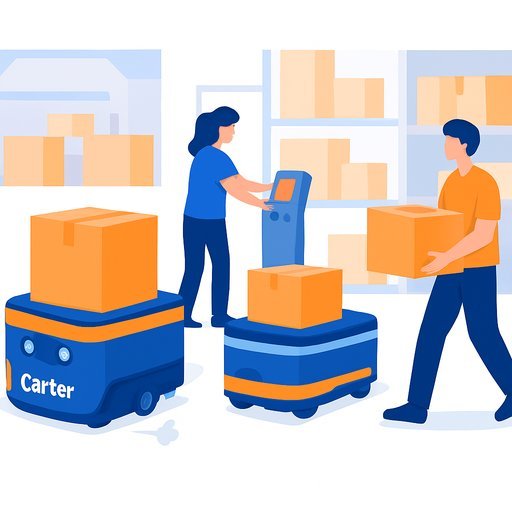
BITZER is testing SAP's Project Embodied AI in live warehouse operations. The goal: integrate physical robots with SAP Business AI and SAP Extended Warehouse Management (EWM) to drive faster response times and reduce operational errors.
For product teams, this is a practical glimpse into how cognitive robotics can plug into existing systems without heavy middleware. Less orchestration overhead, more throughput, and cleaner feedback loops from floor to cloud.
Why product development should care
Warehouse bottlenecks cap production, no matter how strong your line is. BITZER's compressors feed cold-chain operations across healthcare, food, and logistics-so demand swings are real, and precision matters.
Embedding autonomous robots where tasks are repetitive, time-sensitive, and error-prone frees teams to focus on variants, quality, and faster release cycles. The takeaway: higher flow, fewer handoffs, and clearer data for planning.
What SAP is testing with BITZER
SAP's Research and Innovation team is pairing AI with physical robots to act on real-time warehouse data. The proof of concept at BITZER used NEURA's 4NE1 humanoid robot inside an environment already running SAP EWM and the SAP Business Technology Platform.
Early result worth noting: EWM connected directly with robot operations without costly middleware. Tasks ran hands-free once triggered-opening the door to continuous operations across shifts.
How the architecture likely fits together
- Demand signal hits ERP/MES, which feeds tasks to SAP EWM.
- SAP Business AI interprets context (priority, location, constraints) and assigns work.
- The robot executes picks/moves, confirms via sensors, and reports back to EWM.
- Exceptions trigger rerouting or a human-in-the-loop via a simple console.
- Telemetry and task outcomes flow into analytics for throughput and quality tracking.
Use cases that make sense first
- Repetitive transport: pallet moves, staging, line feeding.
- Cycle counts and basic inspections with vision checks.
- Pick and place for standard containers and kits.
- End-of-line replenishment and returns to stock.
Metrics product teams should track
- Dock-to-stock time and pick cycle time (per SKU class).
- Pick/put accuracy and mispick rate.
- Throughput per hour per robot vs. human baseline.
- MTBF, task success rate, and exception frequency.
- Energy use per task and cost per moved unit.
Pilot blueprint you can reuse
- Define the narrowest valuable slice: one workflow, one zone, one shift.
- Map data contracts: EWM task schema, status codes, exception handling.
- Stand up safety: geofencing, emergency stops, lanes, and SOPs for hand-offs.
- Integrate with minimal glue: direct EWM calls where possible to limit fragility.
- Shadow then swap: parallel run, compare metrics, then ramp volume.
- Gate scaling on evidence: require stable KPIs for two consecutive sprints.
Risks and how to de-risk
- Network jitter: cache instructions locally and queue confirmations.
- Vendor lock-in: use open interfaces, document task schemas, keep a rollback plan.
- Safety and compliance: independent validation, training, and incident drills.
- Battery and uptime: hot-swap strategy, charging choreography, and health checks.
- Change fatigue: clear comms, quick wins, and operator feedback loops.
What this signals for product strategy
The BITZER pilot shows that cognitive robotics can slip into existing warehouse stacks with less integration pain than expected. If your stack already runs SAP EWM, the path from idea to live test is short.
The bigger play is demand-driven manufacturing. With 24/7 robotic handling, you can smooth spikes, shorten lead times, and make line planning less fragile.
Where to learn more
Explore the platform pieces behind the pilot:
Next steps for your team
- Pick one workflow with measurable drag and model the current baseline.
- Run a timeboxed POC with strict pass/fail criteria tied to cost per move and accuracy.
- Bake findings into a staged rollout plan with clear safety and change controls.
If you're skilling up product and ops teams for AI-driven workflows, consider the AI Learning Path for Supply Chain Managers as a focused curriculum to get teams production-ready.
Your membership also unlocks: