Power grid operators need better coordination between transmission and distribution, new research shows
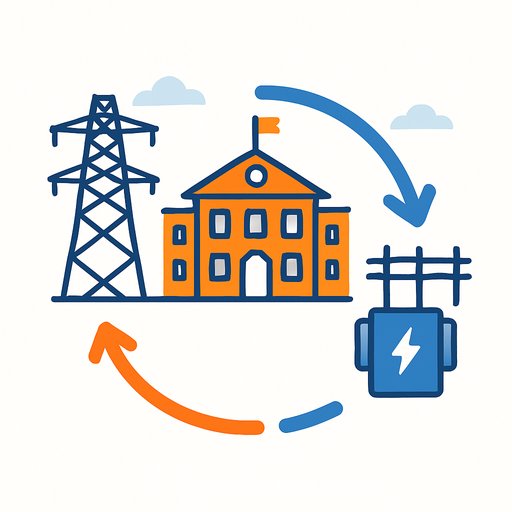
Colorado State University researchers have published a framework that lets transmission and distribution operators coordinate operations without centralizing control-a critical capability as distributed solar, wind, and electric vehicle charging reshape grid demands.
The U.S. power grid has long operated in silos. Utilities manage local distribution systems while regional operators handle transmission, with minimal coordination between them. That separation worked when energy flowed one direction and demand was predictable. It breaks down now.
As more customers install solar panels and charge electric vehicles, distribution networks inject power back into the grid in ways that ripple upstream to transmission operators. Distribution operators often lack visibility into how their decisions affect transmission stability and costs.
The coordination problem costs money. When transmission and distribution operations don't align, utilities dispatch power inefficiently, raising system costs that eventually reach customers.
Professor Zongjie Wang at CSU's Energy Institute developed a method that combines data from both systems using reduced network models and AI-powered modeling. The approach accounts for uncertainty and complexity while giving operators actionable dispatch information-without requiring a centralized control system.
"As distributed energy resources grow, the traditional separation between transmission and distribution operations becomes increasingly inefficient," Wang said. "Industry leaders often lack system-level visibility into how distribution-level resources impact transmission operations."
The framework addresses real operational constraints: weather-related outages, cybersecurity threats, and natural disasters like wildfires and hurricanes all demand faster, better-informed decisions across system boundaries.
The research appears in Scientific Reports. Wang's team tested the method against traditional approaches and found it provided more accurate information while reducing computational demands on operators.
For operations managers overseeing grid modernization projects, the framework offers a concrete path to improve coordination without redesigning entire control systems. Learn more about AI for Operations or explore an AI Learning Path for Operations Managers to understand how these tools apply to your workflows.
Your membership also unlocks: