
AI news ·
Commonwealth Short Story Prize controversy reveals AI's reach into literary writing and judging
AI-generated fiction may have won the 2026 Commonwealth Short Story Prize, with judges possibly using AI tools to evaluate submissions. Detection software gave contradictory results on the same text, exposing how unreliable these tools are.
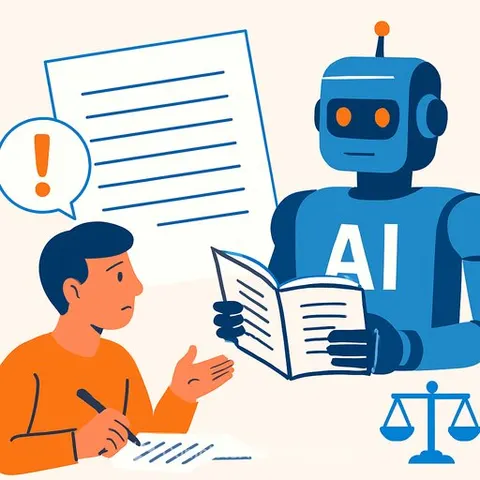
AI-Generated Fiction Won a Literary Prize. Here's What That Means for Writers.
The 2026 Commonwealth Short Story Prize faced a problem that would have baffled literary judges a decade ago: judges may have selected AI-generated fiction as winners, and the judges themselves may have used AI to evaluate submissions.
The controversy centers on a winning story that Claude, an AI system, identified as machine-generated when asked directly. When the same text was presented as human-written, Claude called it "almost certainly human-written." The inconsistency exposed a deeper issue: AI systems favor outputs from other AI systems.
How AI Judges Preferred AI Writing
Research published in the Proceedings of the National Academy of Sciences found that large language models prefer text generated by other language models, similar to how humans prefer human-written work. This bias matters when AI tools enter the judging process.
The judges' comments offered clues. Multiple judges used identical phrasing-words like "quiet" and "richly evocative"-that appeared in different regional categories. The repetition suggested a common source shaping the evaluations.
When Granta magazine tested the winning story, the results contradicted each other. The same text produced opposite verdicts depending on how the question was framed, revealing that AI detection itself is unreliable.
The Theft Problem
Beyond the detection failure sits a harder question: where does AI-generated text come from? Editor and author Nilanjana S. Roy puts it plainly: "From AI slop to AI brilliance, all of it is based first and foremost on the theft and reuse of the work of humans."
AI systems train on existing writing without explicit permission or compensation to authors. The output may be novel in arrangement, but the foundation is human work absorbed without consent.
What This Means for Your Craft
Over 52 percent of online articles are now primarily AI-generated, according to a 2025 study. But quantity doesn't equal quality for fiction. AI prose has identifiable patterns-over-polished rhythm, predictable word choices, a sameness that readers notice.
Writer and podcast host Amit Varma advises students to use AI for research only, not writing itself. His reasoning: "Writing helps you become a better thinker, and by outsourcing your thinking to AI, you are making your future self stupider."
There's a cognitive cost. A 2025 MIT Media Lab study found that excessive reliance on AI-driven solutions leads to "cognitive atrophy" and diminished mental capacity. The effect mirrors what happens when you stop doing mental math.
Karan Madhok, editor at The Chakkar, now finds himself drawn to prose that feels "raw and imperfect." He sees the polish of AI-generated work as a red flag, not a virtue. "Nothing can be more human than the attempt to connect that uncanny space between our emotions and our art," he said. "Art is in that attempt itself-not in the output."
The Feminist Angle
Culture journalist Sayari Debnath frames AI reliance as a personal betrayal. Her grandmother left school after matriculation exams because education wasn't considered necessary for women. Debnath now has the freedom to read, write, and think for a living-a privilege her grandmother never had.
Using ChatGPT to think on her behalf, Debnath said, "feels like a betrayal to my grandmother, a million other women like her across the world, who would have perhaps sacrificed anything to enjoy the freedoms that I do."
Detection Isn't the Answer
AI detection software exists, but it's unreliable. The Commonwealth Prize controversy proved that even sophisticated tools produce contradictory results. Turning detection into an absolute invites witch hunts that benefit no one.
What writers and editors need instead: stronger editorial standards and wider literacy about how AI actually works. Understanding the limitations and biases of these tools matters more than chasing technological solutions.
What's Left
The oldest human obligation remains: pay attention. Read closely. Resist the pull toward automation. Remember that writing isn't the finished page alone.
Writing is the hard, unglamorous work of becoming someone capable of making something that matters. That process-the thinking, the struggle, the revision-is where the value lives.
For writers looking to work effectively with AI tools while protecting their craft, AI for Writers courses offer practical guidance on using AI as a research tool without outsourcing the thinking. Understanding ChatGPT and similar systems helps you see where they're useful and where they fail.