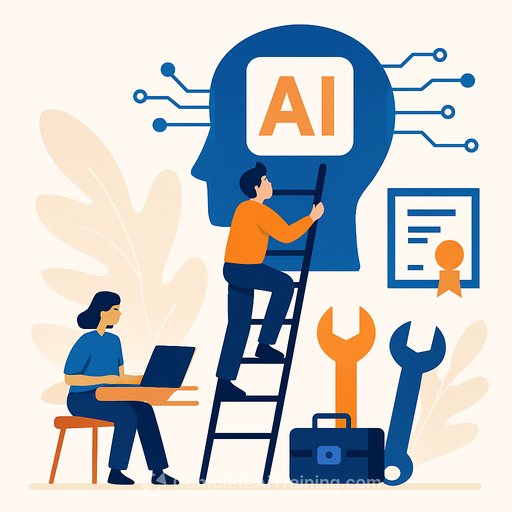
Development and Validation of a Competency-Based Ladder Pathway for AI Literacy Among Higher Vocational Students
The integration of artificial intelligence into various industries demands effective AI literacy development, especially in higher vocational education. Preparing students to work confidently in AI-driven environments requires a structured approach that builds competencies progressively. This article outlines a competency-based ladder pathway crafted to enhance AI literacy among vocational students, validated through extensive research and practical application.
Introduction
AI technologies are reshaping sectors like manufacturing, healthcare, finance, and services, increasing the need for vocational students to acquire relevant AI skills. Traditional vocational training models often lack coherent progressions and competency assessments, leading to fragmented learning experiences. Addressing this gap requires a systematic framework that aligns with industry standards and supports measurable skill acquisition.
This competency-based ladder pathway adopts a three-tier model integrating foundational knowledge, applied skills, and innovation capabilities. It aims to provide clear milestones and personalized learning routes that accommodate varied student backgrounds and career goals.
Theoretical Foundation and Framework
Competency-Based Education and AI Literacy
Competency-Based Education (CBE) shifts focus from time spent in class to skills mastered. It emphasizes clear learning outcomes, flexible pacing, ongoing assessment, and real-world application. This approach suits AI literacy, which involves not just technical know-how but also critical thinking, ethical judgment, and collaboration.
The AI literacy framework includes four dimensions:
- Technical competence: Understanding AI algorithms and tools.
- Cognitive competence: Analytical and problem-solving skills.
- Social competence: Collaboration and communication in human-AI contexts.
- Ethical competence: Awareness of responsible AI use and bias.
Designing the Competency Standards
The competency system covers cognitive foundations, technical skills, practical application, and innovation. Each dimension is assessed through weighted models combining theoretical knowledge and hands-on performance. Tracking student progress over time enables personalized adjustments to learning paths and targeted interventions.
Ladder Development Pathway Principles
- Progressive advancement: Sequential stages that build on prior knowledge and increase in complexity.
- Personalized adaptability: Learning paths that respect individual pace, style, and goals.
- Practice-oriented learning: Integration of industry-relevant projects, case studies, and collaborative problem-solving.
- Competency progression mechanisms: Clear criteria and assessments to ensure mastery before moving forward.
Current Status and Needs Analysis
Survey Design and Implementation
A large-scale survey involving 2,850 students from 15 vocational institutions assessed AI literacy across the four competency dimensions. The questionnaire included 68 items and combined online and offline data collection to maximize reach. Reliability tests confirmed the survey’s consistency and accuracy.
Identifying Competency Deficits
Analysis revealed notable gaps, particularly in technical proficiency and ethical awareness. Many students struggled with AI algorithms and understanding bias or privacy issues. Factors influencing these gaps include limited prior exposure to technology-enhanced learning, curriculum limitations, and lack of instructor expertise.
Personalized Development Needs
Applying clustering techniques identified distinct learner profiles:
- Foundation Builders: Require remedial support for basics.
- Tech-Savvy Innovators: Ready for advanced applications and leadership roles.
Understanding these profiles supports adaptive learning systems that dynamically tailor instruction to individual needs.
Empirical Research on the Ladder Pathway
Model Construction and Validation
The ladder model consists of three layers:
- Foundational Cognitive Layer: Core AI concepts and principles.
- Skills Application Layer: Hands-on practice with AI tools and techniques.
- Comprehensive Innovation Layer: Creative problem-solving and leadership in AI projects.
A controlled experiment with 420 participants compared this pathway to traditional teaching. Results showed significant improvements, including a 56% increase in overall AI literacy and retention rates above 85% after six months.
Teaching Strategies and Methodologies
The pathway uses a mix of instructional methods:
- Project-driven learning: Real-world AI projects foster skill development.
- Case-based instruction: Analysis of successful AI implementations enhances critical thinking.
- Experiential learning: Labs, simulations, and industry partnerships provide authentic contexts.
- Hybrid delivery: Combining online flexibility with face-to-face collaboration.
Learning communities further support peer collaboration and knowledge sharing.
Evaluation System and Effectiveness
The evaluation framework blends formative assessments (ongoing feedback) with summative assessments (competency mastery). Authentic tasks mirror workplace scenarios to ensure practical relevance. Students in the ladder pathway outperformed peers by:
- 34.7% higher cognitive scores.
- 42.3% better performance on skills application.
- 28.9% greater innovation competency.
Statistical tests confirm these improvements are significant and meaningful for workforce readiness.
Conclusion
This competency-based ladder pathway provides a clear, measurable, and adaptable framework for developing AI literacy in higher vocational education. It addresses key deficits in current systems and supports personalized learning journeys.
Results demonstrate that systematic competency progression, combined with project-based and experiential learning, delivers substantial gains in AI knowledge and skills. The pathway also includes robust evaluation tools aligned with industry standards, supporting sustained competency growth and career preparation.
Challenges remain, such as scaling faculty training, resource disparities, and keeping curricula current with AI advancements. Future research should explore integration with generative AI tools, cultural adaptation for diverse educational contexts, and real-time personalized learning analytics.
For IT professionals and educators interested in structured AI learning frameworks, this approach offers practical insights and validated methods. You can explore more AI courses and resources tailored for various skill levels and job roles at Complete AI Training.
Your membership also unlocks: