Console's New AI Hire Signals Creative, 0-to-1 Product Bets
Console announced the hiring of AI/ML engineer Rohan Agarwal. He was among the early AI/ML engineers at Sentry and reportedly helped build its agentic AI product, Seer, from inception.
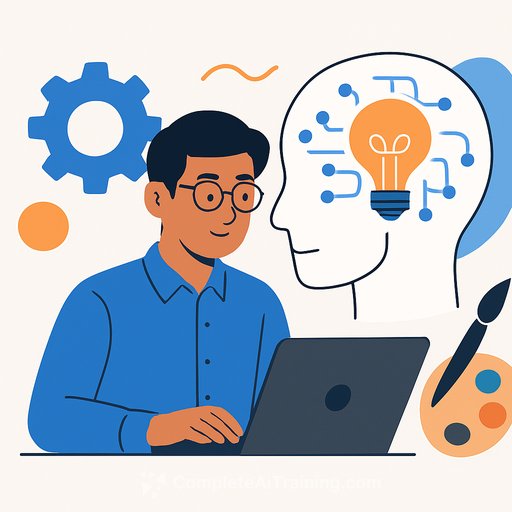
The post also highlights Agarwal's research on human-AI co-creativity at Georgia Tech and his background as an artist with work exhibited at The Met. For product teams, this mix points to creativity-oriented AI features and a push for 0-to-1 execution. The post doesn't outline specific products, revenue impact, or timelines, but the talent profile hints at a pipeline in motion.
Why this matters for product development
- Agentic AI experience suggests deeper automation and workflow ownership inside the product, not just surface-level assistants. See AI Agents & Automation for frameworks and orchestration patterns.
- Human-AI co-creativity research implies UX that augments users' taste, decisions, and output quality-useful for ideation, iteration, and review loops.
- 0-to-1 background signals bias toward shipping end-to-end slices, not research for its own sake.
Likely product bets to explore
- In-product agents that triage, draft, and resolve tasks across support, QA, content ops, or growth experiments.
- Co-creative flows: suggestion engines, structured brainstorming, variant generation, and critique loops that keep users in control.
- Closed-loop learning: capture feedback, outcomes, and preference signals to improve prompts, tools, and policies over time.
- Trust features: audit trails, source citations, and safe-mode toggles to align output with policy and brand.
Signals to validate before committing roadmap
- Problem depth: Which user jobs have high friction and repetitive steps that an agent can own end-to-end?
- Data readiness: Do we have high-quality context (tickets, docs, logs, CRM) and tool access (APIs) for reliable actions?
- Cost envelope: Can we keep unit economics healthy (latency, token spend, retries) at projected volume?
- Safety: What's the failure policy, rollback path, and human-in-the-loop checkpoint for sensitive actions?
Team and hiring implications
- Prioritize engineers who ship thin vertical slices: model choice, tool wiring, evals, and UI-end to end.
- Fluency with LLM tool use, retrieval, and agent frameworks-plus a habit of writing evals early.
- Strong product instincts: instrument co-creative UX, not just "chat in a box."
- Partner closely with design and research to measure delight, control, and trust-not only accuracy.
90-day execution plan (practical)
- Weeks 1-2: Map top 3 candidate workflows by pain, frequency, and data/tool access. Pick one with clear success criteria.
- Weeks 3-4: Ship a stub agent with guardrails. Log every step, capture human edits, and measure quality/latency/cost.
- Weeks 5-8: Add tools (search, ticketing, CRM, code ops). Write evals for edge cases. Tighten prompts and policies.
- Weeks 9-12: Expand scope carefully. Run A/Bs vs. current flow. Publish a short "trust & safety" spec for stakeholders.
Metrics that matter
- Time-to-first-value and cycle time reduction per workflow.
- Task completion rate without human correction; edit distance when corrections occur.
- Agent autonomy ratio: steps done by the agent vs. the user.
- User satisfaction with control and confidence (not just CSAT).
- Cost per successful action, including retries and tool calls.
Risks and open questions
The post centers on credentials, not strategy. There's no detail on product scope, revenue impact, or timelines.
- Where will agents own full workflows vs. assist? What's the escalation path?
- How will proprietary data and compliance be handled across tools and vendors?
- What's the defensibility: unique data, distribution, or UX?
- What monetization model fits (seat, usage, workflow add-on)?
What to watch next
- Additional hires across data, platform, and design that enable agentic features.
- Early pilots in high-leverage workflows and public demos with measurable outcomes.
- Partner integrations that unlock tool access (support, code, analytics) for agents.
- A clear point of view on co-creative UX-how humans set direction and review output.
If you're planning similar bets, these resources can help: AI for Product Development.
Your membership also unlocks: