
AI news ·
Construction executives discuss AI and workforce development at GWIC conference
Peckar & Abramson launched a scholarship supporting one student, one mentor, and one educator. Construction execs described AI as a tool to improve efficiency, not cut jobs.
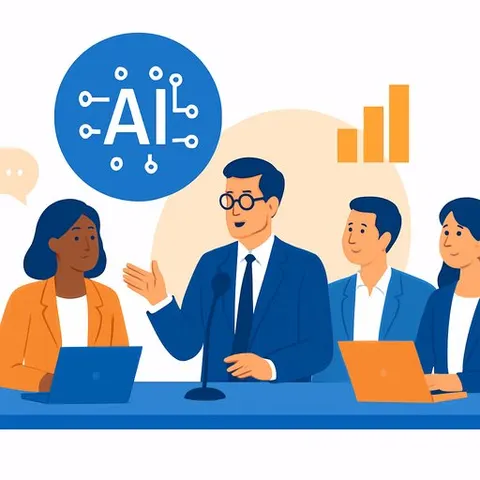
Construction and engineering executives detailed a measured approach to artificial intelligence at the Groundbreaking Women in Construction (GWIC) conference in July 2026, describing AI as a tool to improve operational efficiency rather than cut headcount. The industry's emphasis on human oversight and technical skill development offers a model for IT departments deploying AI in field-based environments, where trust and accuracy carry more weight than automation speed.
Scholarship backs construction's next generation
Peckar & Abramson launched the Melinda S. Gentile Future Groundbreaker Scholarship during the event. The award will support one student, one mentor, and one high school educator selected through the ACE Mentor Program of America. The initiative aims to strengthen the pipeline for architecture, engineering, and construction careers by funding conference attendance and professional development.
AI handled with care on jobsites and in offices
AI integration was a major conference theme. Doris Espiritu, district-wide dean of engineering for the City Colleges of Chicago, said schools and employers must maintain technical oversight and sharp critical thinking alongside any AI adoption. Executives from firms including Engineering Partners Inc. and Balfour Beatty reported using AI mainly for data management, coordination tasks, and administrative workflows, freeing employees to focus on project execution and stakeholder management.
The conversations aligned with the operations-focused view of AI for Real Estate & Construction: technology that supports people, not supplants them.
Workforce pressures drive leadership and tech planning
Contractors continue to grapple with recruitment and retention while exploring digital tools that can improve project coordination. Conference sessions concentrated on leadership development and succession planning, alongside technology adoption. For owners and developers, continued investment in training and well-scoped AI may influence how projects get delivered and how labor pools evolve in the coming years.
Industry leaders framed the decisions in strategic terms, a topic that sits squarely within AI for Executives & Strategy.
Why this matters for IT and development teams
Construction's approach to AI carries a clear signal for technologists building tools or managing infrastructure in asset-heavy sectors. Buyers are prioritizing applications that augment human judgment, not automate it away. The emphasis on critical thinking as a companion to AI adoption-voiced by engineering educators and corporate executives-means training and IT support must teach users to verify machine outputs and maintain deep domain expertise. This pushes developers to design systems with transparency and auditability at the center, not as an afterthought.