The Fallacy of "Real" Creativity: Consumers Don't Care If AI Made Your Ad
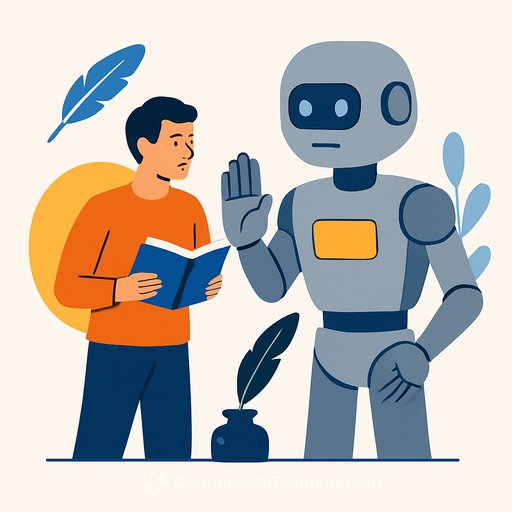
In 1983, the Kurzweil K250 hit the scene and sounded so much like a Steinway that purists threw a fit. Then Stevie Wonder stepped in, used it, and proved the point: the tool is less important than the outcome. The keyboard didn't kill the grand piano. It expanded what was possible-and who could participate.
Same story today. AI isn't a threat to creativity. It's another instrument. And audiences judge the song, not the studio.
What consumers actually care about
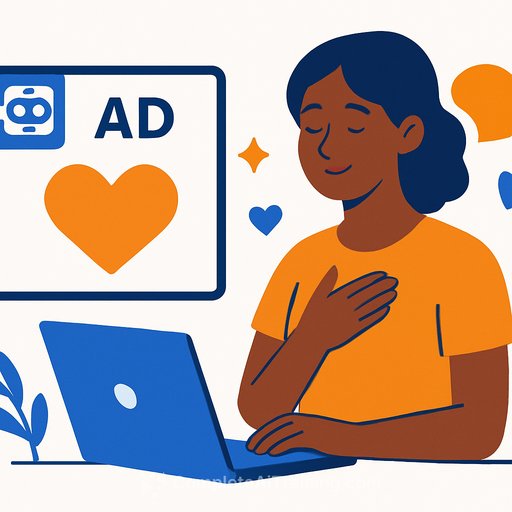
A nationally representative survey of 1,000 U.S. consumers showed 52% don't care if AI is used in ads. Another 18% said it improves their perception of a brand. Among 18-35 year-olds, that rose to 23%-and 34% of that same group also said they'd like a brand less if it used AI. Translation: younger audiences are more curious and more critical. Execution matters.
Consumers aren't auditing your process. They're reacting to what they see and feel.
Proof in the work: Puma's dual-ad test
Puma released two ads-one traditional ("Go Wild") and one AI-generated-and tested both with 400 consumers. The test included a reel to gauge standout, a full watch with second-by-second emotion capture, and purchase intent. Both ads ranked in the top 20% of 4,000+ ads. The AI ad won on sales impact and brand impact.
Why? Emotion. The AI ad scored 15% higher in overall emotion. In open-ended feedback, 30% called out how uplifting, inspiring, empowering, and motivational it felt. That emotional resonance drove effectiveness, regardless of how it was made.
Zappi's data shows ads in the top quartile for overall emotion are 2x more likely to generate strong sales impact. That's the metric to chase.
What this means for creatives
Your job isn't to defend the process. It's to ship work that lands. AI is simply a way to explore more ideas faster, pressure-test them earlier, and craft with better signal.
A practical playbook you can use this quarter
- 1) Use AI to shape early concepts, then test with real people. Spin up 8-10 routes from the brief. Build lightweight scripts, frames, or audio cues. Put them in front of consumers early and compare them against historical benchmarks. Keep the top 2-3. Then use your taste to refine.
- 2) Be willing to fail forward. Tools evolve fast. Generative video like Sora may look rough one month and studio-ready the next. Teams that experiment now will move smoother later. Treat misfires as practice reps, not proof you should sit out.
- 3) Stay authentic: AI augments, it doesn't replace your voice. Nearly 73% of consumers believe they can spot AI in ads. That means execution and relevance carry the day. Keep the brand's truth intact. Use AI for scale, iteration, and insights-use people for story, nuance, and taste.
A simple workflow to steal
- Brief → Generate multiple routes with AI → Cull to 2-3 with the team
- Build quick storyboards/animatics → Test for emotion and clarity
- Iterate on what spikes → Craft final with your A-team
- Ship → Measure → Log learnings for the next cycle
As Chris Bellinger, Chief Creative Officer at PepsiCo, put it: "Creativity is a contact sport." The number of touches changes as tools evolve. The fundamentals don't: story, emotion, relevance.
Bottom line: People don't care whether you used a grand piano or a keyboard. They care if they like the song.
For teams leveling up their AI workflow
- Explore new-gen video tools and courses curated for creatives: Generative video tools
- Find learning paths by role to upskill your team fast: Courses by job
Use the instrument that helps you hit the right note-then play it like you mean it.
Your membership also unlocks: