Consumers Are Losing Trust in Generative AI. Here's Why Product Developers Need to Listen
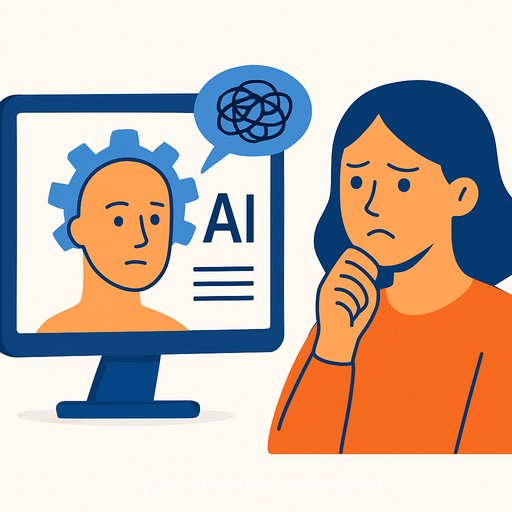
Generative AI has a trust problem. Merriam-Webster named "slop" its word of 2025-a direct reference to the declining quality and credibility of AI-generated content flooding digital spaces. For product developers, this shift signals a fundamental market failure: the industry oversold capability and underdelivered results.
The disconnect is stark. Tech leaders and researchers focused on potential rather than practical outcomes. They positioned AI as something companies should adopt to stay competitive, not as a tool to solve specific problems. Consumers received a message that was vague and broad-every solution marketed as an answer for everything and nothing simultaneously.
The February Super Bowl ads crystallized this problem. A parade of AI-focused commercials promoted tools with little clarity about actual use cases or benefits. Some ads were themselves created with generative technologies, creating an ironic demonstration of the technology's quality issues. Viewers saw companies talking about their own achievements rather than addressing what customers actually needed.
Where Product Development Went Wrong
The core issue: companies built products around what AI could do, not what customers needed it to do. This backward approach created tools that were technically impressive but practically useless.
Real-world results have reinforced consumer skepticism. Social media platforms are overrun with synthetic content. Online marketplaces host AI-powered scams. Corporate AI initiatives have missed financial targets and, in many cases, made employees' jobs harder. The gap between promised value and delivered value has grown too large to ignore.
Workers experiencing these failures firsthand have become skeptical of new AI initiatives. When a product launch doesn't improve workflows or creates more problems, trust erodes quickly-not just in that product, but in the category itself.
The Path Forward: Specificity Over Hype
Product developers can reverse this trend by anchoring decisions in specificity rather than potential. This means defining exactly who will use the product, what problem it solves, and how success is measured before building.
Specificity requires discipline. It means saying no to use cases that don't fit the core problem. It means testing with actual users early and often. It means being honest about limitations instead of marketing around them.
For teams working on generative AI and LLM products, this approach directly addresses why consumers have lost faith. The market doesn't need more general-purpose tools. It needs products built for specific workflows, specific industries, specific user groups-with clear metrics for success.
Product developers in 2026 have an opportunity the industry didn't take in 2024 and 2025: build what people actually need instead of what the technology makes possible. Learn more about AI for Product Development to understand how to approach this shift strategically.
The narrative around AI doesn't have to stay negative. But changing it requires product teams to stop chasing hype and start solving real problems with measurable outcomes.
Your membership also unlocks: