
AI news ·
Consumers want AI to assist with shopping but retain control over purchases
Consumers overwhelmingly resist autonomous AI for payments, a PYMNTS Intelligence report shows. Firms rushing to build autonomous agents misread the desire for assistance with human control.
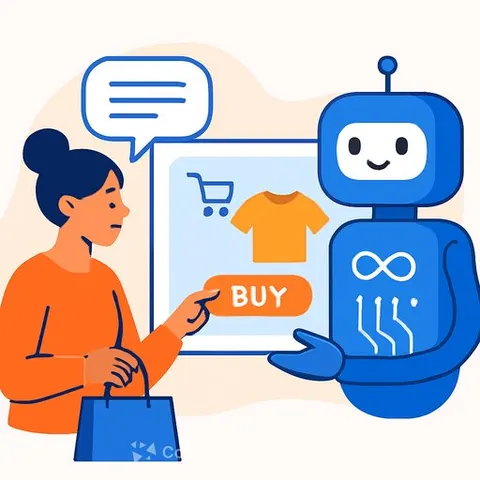
Consumers are adopting AI for product discovery and price comparisons but overwhelmingly resist autonomous decision-making on high-stakes tasks like payments and financial commitments, according to PYMNTS Intelligence's May 2026 Consumer AI Benchmark released June 2026. The data shows that businesses rushing to build fully autonomous shopping agents risk misreading what users actually want: assistance that leaves final control in human hands.
The report found that AI adoption continues to accelerate, but comfort levels drop sharply when software independently selects products, moves money, or makes irreversible choices. Consumers readily accept algorithm-driven recommendations, deal comparisons, and personalized discovery - areas where AI enhances efficiency without removing oversight. Autonomous execution, however, triggers concerns around accountability and transparency even when the system is technically accurate.
Agentic commerce faces a reality check
The findings challenge a common assumption among technology companies that users ultimately want AI to independently book travel, purchase items, and manage finances. Instead, surveyed consumers strongly prefer AI as a collaborative layer. Product recommendations, shopping organization, and price comparisons rank high in comfort, because these functions align with how people already behave online - relying on algorithmic curation from Netflix suggestions to Amazon rankings.
"Allowing software to independently select and purchase products, move money, or make financial decisions triggers concerns around accountability, transparency, and trust," the report said. Even highly accurate systems can feel intrusive when consumers perceive they are losing visibility into the decision process. This distinction matters because it shapes how AI Agents & Automation should be designed: as tools that surface options and explanations, not as black boxes that act unilaterally.
Why friction may become valuable again
For years, the dominant goal in digital commerce was seamlessness. One-click checkout, automated renewals, and invisible payments aimed to eliminate decision points. But the report points to a paradox: when autonomous systems are involved, complete frictionlessness can feel unsettling. Consumers may want strategic pauses - confirmation screens, explanation of recommendations, approval checkpoints - inserted into AI-driven experiences.
This has direct implications for marketing and development teams. In marketing contexts, AI for Marketing personalization works best when it informs rather than decides, presenting curated options that shoppers can accept or override. The risk for brands isn't simply falling behind in AI adoption; it's losing direct customer relationships to external AI platforms that mediate decisions upstream. Consumers seem to prefer centralized, general-purpose assistants over a patchwork of brand-specific agents.
Why this matters for marketing, IT, and development
For marketing professionals, the data is a clear directive: build AI interactions that explain themselves and preserve user agency. Recommendation engines that justify why a product is suggested and let users confirm before purchase will build more trust than systems that act automatically. The goal shifts from removing all friction to removing unnecessary friction while keeping decision gates visible.
IT and development teams must architect experiences where autonomy is default-off for high-stakes actions. Approval checkpoints, transaction confirmations, and clear audit trails are not relics - they are features consumers want when AI enters the loop. The path to autonomous commerce won't be a rapid handoff from humans to machines. It will be a prolonged negotiation over visibility, oversight, and the right balance between speed and control.