Legal Challenges of AI in Private Digital Health and MedTech
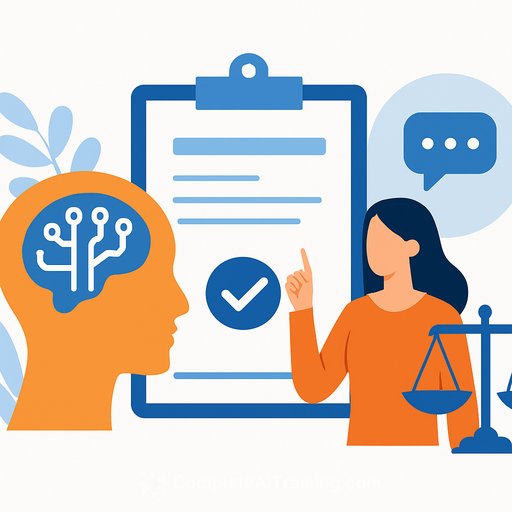
Private digital health and medtech companies are increasingly embedding artificial intelligence (AI) into diagnostics, patient monitoring, and engagement platforms. This surge raises complex legal questions about using sensitive health data, especially regarding how AI systems are trained on such data when anonymisation isn't foolproof or re-identification remains a risk.
Health data benefits from heightened legal protection under both the UK and EU GDPR. This article outlines practical approaches for healthtech providers to structure contracts and data governance frameworks that reduce legal risks while supporting innovation.
Part 1: Contractual Considerations for AI Development in Healthtech
Contracts are central to defining the rights, limits, and responsibilities of parties working with AI and health data. They must balance lawful innovation with patients’ rights, regulatory compliance, and commercial interests. The strength of these protections depends on clear, enforceable contractual terms.
A. Structuring AI Training and Use Rights
- Contracts should clearly specify the authorised scope of data use for AI training, tailored to its purpose—whether for diagnostic tools, internal research, performance improvement, or commercial product development.
- Avoid broad or catch-all authorisations as they create legal uncertainty and may not hold up under regulatory scrutiny.
- Ownership of trained AI models, including any derivative or fine-tuned versions, must be explicitly allocated, along with licensing terms.
- Access rights for subcontractors, AI vendors, and cloud providers need regulation, covering both access and onward use, especially for collaborative or cloud-hosted AI development.
- Limitations on subcontracting, sublicensing, and further commercial use are essential to minimize legal and reputational risks.
B. Risk Allocation and Enforcement
- Contracts should clearly assign liability with tailored indemnities for potential data breaches or misuse.
- Both parties should require warranties confirming that training data was lawfully collected, free of undisclosed third-party rights, and GDPR-compliant.
- Audit rights are crucial to monitor data processing throughout AI development and detect any unauthorized use.
- Termination clauses must allow ending agreements for unauthorized data sharing, exceeding the agreed training purpose, or data breaches involving health information.
- Contracts should specify how data must be returned, deleted, or anonymised at the end of the term, and clarify whether trained models must be destroyed or can be retained post-termination.
Part 2: Data Protection Considerations for AI Training on Health Data
Alongside contracts, healthtech providers need to document the lawful basis for processing health data and ensure compliance with UK and EU GDPR requirements throughout AI development.
A. Legal Basis and Anonymisation under GDPR
- Health data qualifies as special category data under GDPR and requires narrow exceptions to process lawfully.
- Consent is often relied upon in consumer health apps, but it must be freely given, specific, and can be withdrawn—making it a fragile basis.
- Scientific research exemptions may apply, but these are interpreted narrowly and might exclude commercial product development depending on national laws.
- Contrary to common belief, truly anonymised data is rare. Anonymisation must be irreversible, assessed against real-world re-identification risks, and consider all parties with potential access.
- Regular re-identification testing, combined with data minimisation, masking, aggregation, and contractual bans on re-identification, should form part of technical and organisational safeguards.
B. Data Sharing Governance and International Transfers
- Data Sharing Agreements (DSAs) should clearly define each party’s role (controller, joint controller, or processor), legal basis for processing, and restrict data use to agreed purposes.
- DSAs need to cover retention periods, data subject rights, onward disclosures, and auditing mechanisms. AI development’s iterative nature may require flexible terms for ongoing model refinement.
- When personal data moves outside the UK or EU to third countries—for example, to AI vendors or cloud hosts—appropriate safeguards are necessary.
- This often involves using Standard Contractual Clauses (SCCs) in the EU, the UK’s International Data Transfer Agreement (IDTA), or relying on adequacy decisions.
- Transfer Impact Assessments (TIAs) must be completed, and supplementary measures may be needed to ensure equivalent data protection abroad.
- The UK’s Information Commissioner’s Office (ICO) also recommends that AI systems respect data protection principles like explainability and accountability throughout their lifecycle.
The use of AI in healthtech offers significant benefits but comes with strict contractual, legal, regulatory, and ethical responsibilities. Providers must carefully craft agreements and governance frameworks to keep innovation compliant and data secure.
For those involved in AI development and legal compliance looking to deepen their expertise, exploring targeted AI courses can provide valuable insights. Visit Complete AI Training's latest AI courses for practical learning paths.
Your membership also unlocks: