Miracle Agholor on Accountable AI: A Field Guide for Product Teams
Miracle Agholor is a UK-based technology professional, researcher, and emerging voice at the intersection of AI, agentic systems, and data sovereignty. He has worked inside UK public institutions and founded Vision Labs in Nigeria and VisionMinds LTD in the UK. His focus: build scalable technology that drives real economic value for underrepresented regions, while keeping AI ethical and accountable.
This piece distills his perspective into practical guidance for product leaders building with AI today.
Where to Draw the Line: Human Judgment vs. Autonomy
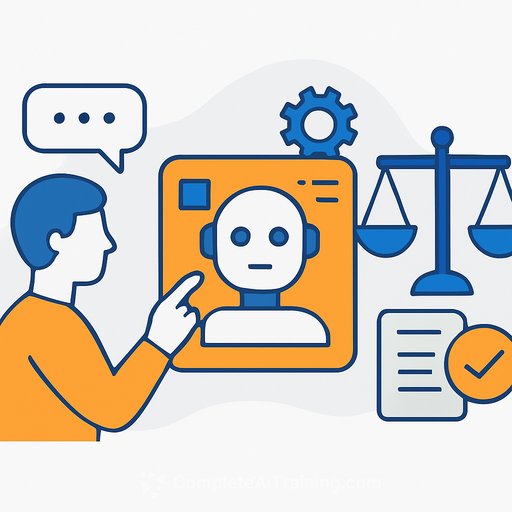
AI can recommend; humans must decide when outcomes are costly or irreversible. If the system touches opportunity, security, or rights, keep a human accountable for the final call.
- High-stakes domains: mandate review (employment screening, credit, healthcare access).
- Medium risk: human override with clear escalation paths.
- Low risk: monitor with tight feedback loops and drift alerts.
His experience at 4T5NG: accountability was non-negotiable in deployment, even when automation promised speed.
The First Failure You Won't See: Loss of Context
Metrics can look "green" while the system quietly drifts from reality. Invisible drift shows up before visible damage.
- Track real-world fit, not just model metrics: complaint rates, appeal rates, false escalations, edge-case coverage.
- Run live context checks: shadow evaluations, periodic re-labeling, user interviews with recent decisions.
- Instrument "why" signals: capture explanations, confidence, and uncertainty routing.
Uptake can rise while trust falls. Adoption isn't success if people feel misjudged. See guiding principles from the OECD for context on trustworthy AI here.
Authority Comes From Outcomes, Not Tech
In the UK, trust often comes from institutional legitimacy. In African innovation spaces, trust comes from results. Both expect relevance and impact.
For product teams, that means ship less novelty and more alignment. Measure whether the product helps people do what they actually want to do, not what your roadmap hopes they will.
Data Sovereignty: What It Means for Users
Data sovereignty decides who benefits from the data people create and who can correct it. Patients, consumers, and citizens generate data that creates billions in value each year, yet they rarely share in that value or control inaccuracies.
- Build correction flows: let users see, challenge, and fix data that drives decisions.
- Log provenance: track where data came from and how it changed.
- Share value fairly: consider rewards, discounts, or transparent data-use policies.
Context Mismatch: The Hidden Cost of Imported Systems
Technologies designed without local realities can erode trust and worsen inequality. People end up adapting to the system instead of the system adapting to them.
- Localize the objective function: define success using community outcomes, not just efficiency.
- Pilot with representative users: avoid bias toward high-visibility groups.
- Keep options open: give users non-AI or assisted paths for critical tasks.
Government tech adoption is often measured at the surface; value is earned in daily use. For broader context, see the World Bank's work on GovTech maturity here.
Why the Most Affected Are Often Excluded
Decision-makers optimize for efficiency and scale. Impacted people live with job loss, service denial, and unequal outcomes-usually without a voice.
- Seat affected users in Design reviews and post-launch councils.
- Publish decision policies in plain language and test for comprehension.
- Track distributional impact: who benefits, who loses, and why.
Should You Use AI Here at All?
The better question: does this solve a root problem or speed up a bad process? At 4T5NG, the team tested whether AI improved outcomes or just made flawed workflows faster.
- If overhead is the issue (e.g., admin burden in healthcare), deploy AI with accountability and clear ROI.
- If fairness, quality, or trust is the issue, fix policy and data first; then consider AI.
- Prove value with counterfactuals: what improves vs. what only accelerates.
Influence Without Title
From youth-led initiatives to startup teams, influence follows shared purpose and trust, not job titles. Build coalitions, clarify outcomes, and make decisions visible.
- Write down the mission in one sentence.
- Define 3 non-negotiable principles (e.g., "no irreversible harm without human review").
- Show progress weekly with user evidence, not just metrics.
The Obligation of Technologists
AI systems allocate access to work, capital, and services. That sets a moral bar for product design. You can't be neutral when your choices pick winners and losers.
- Build accountability into the stack: audits, recourse, explainability, and redress.
- Model long-term consequences, not just short-term KPIs.
- Reduce inequity as a design goal, not a compliance checkbox.
In Miracle's words, the task is to use AI for public good while staying aligned with societal needs-especially for places that've been overlooked.
Product Checklist You Can Use This Week
- Define human-in-the-loop thresholds for irreversible outcomes.
- Add context drift monitors tied to real user signals.
- Ship a data correction flow and document data lineage.
- Run a distributional impact review before each major release.
- Publish a one-page decision policy users can actually read.
- Set quarterly reviews with representatives of impacted groups.
About Miracle Agholor
Miracle Agholor is a UK-based technology professional and researcher focused on AI, agentic systems, and data sovereignty. He has authored a book on AI and agentic intelligence, written Research on the societal impact of intelligent systems, and founded Vision Labs (Nigeria) and VisionMinds LTD (UK). His work centers on scalable technologies that create social and economic value-especially for Africa and other underrepresented regions-while promoting ethical, responsible adoption.
Level Up Your Team
If your roadmap includes AI features and you need structured upskilling, explore role-based options here: AI courses by job.
Your membership also unlocks: