2025 put AI training data on trial
AI companies spent years scraping the open web to build generative models. They framed it as lawful data collection and transformative use. Rights holders saw wholesale copying. In 2025, they pushed back-hard-with lawsuits that forced the issue into courtrooms.
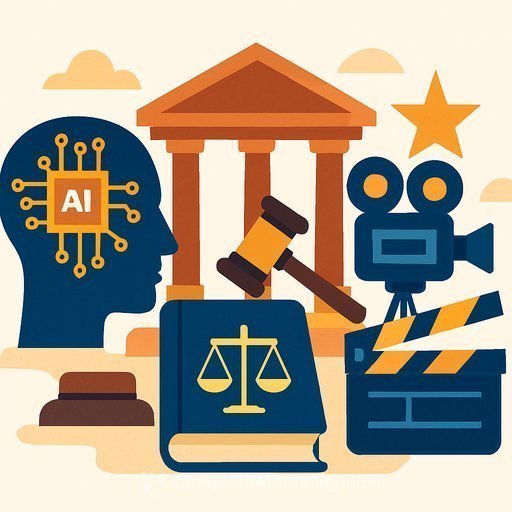
One flashpoint: allegations that image generators were trained on studio content without permission. For example, Disney raised concerns that Midjourney learned from films like The Lion King. The core dispute is simple: does ingesting copyrighted works to train a model qualify as fair use, or is it unlicensed copying at industrial scale?
Why this year felt different
- Claims moved from niche creators to major studios, publishers, and agencies-bringing deeper pockets and discovery pressure.
- Courts began scrutinizing not just outputs, but inputs and training pipelines.
- Vendors faced tougher questions from enterprise buyers on indemnities, dataset provenance, and output filtering.
The legal fault lines now in play
- Fair use (US): Is training "transformative," or is it an unlicensed substitute for licensing markets? Factor-by-factor analysis now matters more than slogans.
- Reproduction vs. learning: Plaintiffs argue training requires making copies; defendants argue weights contain statistical facts, not expressive content.
- Regurgitation risk: Near-verbatim outputs strengthen infringement claims and undermine fair use defenses.
- Terms of service: Scraping behind click-through restrictions can trigger breach-of-contract and anti-circumvention theories.
- EU text/data mining rules: The EU permits TDM with opt-outs. Rights holders who opt out can shut the door on training uses within the EU framework.
- Secondary liability: Downstream outputs that echo protected works raise contributory and vicarious theories.
- Trade secrets vs. transparency: Defendants claim model weights and corpora are proprietary; plaintiffs push for disclosure to prove copying and damages.
Useful references: the U.S. Copyright Office's AI initiative and the EU's text and data mining exceptions in the DSM Directive (Articles 3-4) on EUR-Lex.
Action plan for in-house counsel
- Inventory your AI stack: What models are in production, who built them, and what was the data source? Keep a central registry.
- Demand provenance: Require vendors to disclose dataset sourcing, licensing practices, and opt-out compliance for the EU.
- Tighten contracts: Secure indemnities, caps that match exposure, warranty of rights to training data, and audit rights under protective order.
- Reduce regurgitation: Implement and document filters, similarity checks, and retention controls. Log prompts/outputs for incident review.
- Respect opt-outs: For EU activities, operationalize rights-holder opt-outs and update crawler policies accordingly.
- Create a data gate: Bar training on copyrighted works without license, and isolate user data from model training absent express consent.
- Claims protocol: Stand up a takedown and rectification path for alleged infringing outputs, with defined SLAs and escalation.
- Insurance review: Confirm coverage for IP infringement tied to AI outputs and vendor activities.
For litigators preparing or defending cases
- Discovery targets: Pretraining corpora, data deduplication logs, filtering systems, similarity metrics, red-teaming results, and model cards.
- Testing: Prompting to surface memorization; measuring overlap with known works; expert analysis on weights and training dynamics.
- Damages theories: Market substitution, licensing benchmarks, unjust enrichment, and statutory damages where available.
- Injunctive relief: Feasibility of model takedowns, retraining, or dataset purges; proposals for supervised retraining or content filters.
- Protective orders: Balance trade secrets with access-stage disclosures and use neutral experts if needed.
- Venue strategy: Consider circuits with mature fair use jurisprudence and familiarity with tech IP.
Procurement checklist for buyers of AI tools
- Named datasets and licensing approach (no "black box" answers).
- Evidence of opt-out compliance in the EU and policies for robots.txt and comparable signals.
- Memorization mitigation and output similarity controls.
- Human-in-the-loop workflows for sensitive use cases.
- Model update cadence and obligations to remediate infringing behavior.
What to watch in 2026
- Fair use clarity: Courts will refine how training stacks up under the four factors.
- Collective licensing: Industry may move toward blanket licenses for large corpora if liability signals sharpen.
- Transparency norms: Protective-order playbooks could standardize limited disclosures of training data and testing methods.
- Output liability: Expect more cases focused on specific regurgitated or style-identifiable outputs.
Resources
- Practical AI upskilling for legal teams: Courses by job
- Track vendor ecosystems: AI courses by leading companies
Bottom line: 2025 forced the industry to face the copyright question. Whether training is lawful "reading" or unlawful copying will turn on facts, not marketing lines. Build your record, fix your contracts, and be ready to show your work.
Your membership also unlocks: