Cornell instructor brings typewriters into classroom to stop AI-written assignments
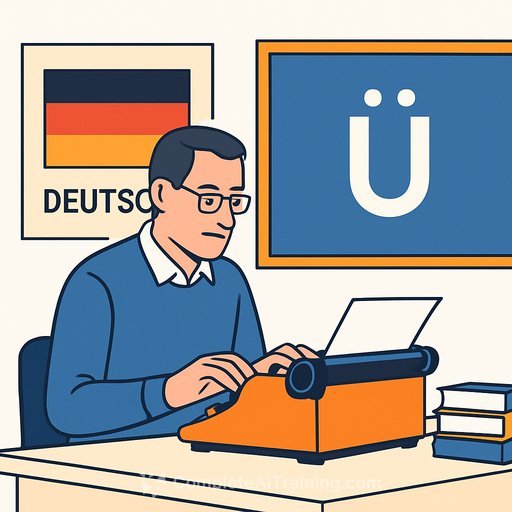
Grit Matthias Phelps, a German language instructor at Cornell University, hands students a manual typewriter once each semester. No screens. No spellcheckers. No delete keys. Students must write their assignments the way people did decades ago.
The exercise began in spring 2023 when Phelps grew tired of reading polished work she knew students hadn't written themselves. Generative AI and online translation platforms were producing grammatically flawless assignments. "What's the point of me reading it if it's already correct anyway, and you didn't write it yourself?" she said.
Phelps sourced dozens of old manual typewriters from thrift shops and online marketplaces. She calls the assignment "analog" in her syllabus.
The machines confuse students unfamiliar with how they work
Catherine Mong, a 19-year-old freshman, arrived for class expecting her usual laptop setup. Instead, she found a typewriter at her desk. "I was so confused. I had no idea what was happening. I'd seen typewriters in movies, but they don't tell you how a typewriter works," she said.
Phelps demonstrates the basics: how to feed paper manually, how hard to strike the keys, what the dinging bell means at the end of each line. Students learn that "return" refers to the carriage return - a detail most have never encountered.
The machines force a different pace. "Everything slows down. It's like back in the old days when you really did one thing at a time. And there was joy in doing it," Phelps said. She brings her two children, aged 7 and 9, to serve as "tech support" and keep students from using their phones.
The real lesson extends beyond typewriter mechanics
Ratchaphon Lertdamrongwong, a sophomore computer science major, wrote a critique of a German film during one assignment. Without screens and notifications, he had to ask classmates for help instead of searching online.
"While writing the essay, I had to talk a lot more, socialize a lot more, which I guess was normal back then," he said. "But it's drastically different from how we interact within the classroom in modern times."
Phelps' approach reflects a broader shift across higher education. Universities are adopting in-class pen-and-paper exams and oral tests to prevent students from using AI for laptop-based assignments. Whether typewriter use spreads beyond Cornell remains unclear, but the underlying problem is clear: institutions are rethinking how they assess student work.
For AI for Writers and those teaching writing, the tension between technology and authentic work is becoming unavoidable. Phelps' solution is deliberately low-tech, but the question it raises is thoroughly modern: how do educators verify students have actually learned?
Your membership also unlocks: