Cornell Instructor Uses Typewriters to Combat AI in Student Writing
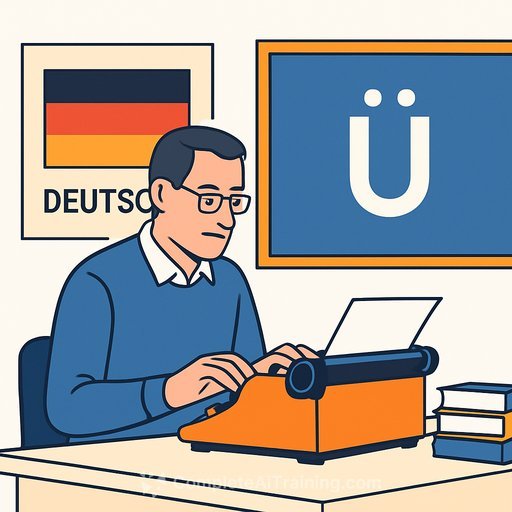
A German language instructor at Cornell University is asking students to submit assignments on manual typewriters-machines without delete keys, spellcheckers, or internet access. Grit Matthias Phelps introduced the exercise in spring 2023 after noticing students were using generative AI and online translation tools to produce grammatically flawless work they hadn't written themselves.
"What's the point of me reading it if it's already correct anyway, and you didn't write it yourself?" Phelps said. She sourced dozens of used typewriters from thrift shops and online marketplaces to create what her syllabus calls an "analog" assignment.
The approach reflects a broader shift in higher education. Schools across the country are adopting in-class pen-and-paper exams and oral tests to prevent students from relying on AI for laptop-based assignments.
Students Discover Writing Without Distractions
For many students, using a typewriter proved unfamiliar. Catherine Mong, a 19-year-old freshman, had only seen typewriters in movies. "I didn't know there was a whole science to using a typewriter," she said after learning how to feed paper manually and return the carriage at the end of each line.
Phelps brings her two children, ages 7 and 9, to class on analog days to serve as "tech support" and ensure students keep their phones away.
Ratchaphon Lertdamrongwong, a computer science major, noticed the shift extended beyond the machine itself. "The difference with typing on a typewriter is not just how you interact with the typewriter, but how you interact with the world around you," he said.
Without notifications or instant answers available, students asked classmates for help more often. Lertdamrongwong found himself thinking more carefully before typing. "I was forced to actually think about the problem on my own instead of delegating to AI or Google search," he said.
Mistakes Become Part of the Learning Process
Without a delete key, students had to accept imperfection. Mong, working with a recently broken wrist, typed with one hand and made frequent errors. She initially felt frustrated by the messy appearance of her work.
Phelps encouraged students to backspace and type X's over mistakes rather than start over. Mong eventually embraced the imperfection, using odd spacing and fragmentation to mimic the style of poet E.E. Cummings in her assignment.
"It's part of the process of learning that you're going to make mistakes," Mong said. She saved her drafts and plans to display them. "I'm kind of fascinated by typewriters," she added.
For educators looking to address similar challenges with AI use in assignments, resources like the AI Learning Path for Teachers offer strategies for managing technology in the classroom. Additional context on AI for Education can help instructors understand the broader implications of AI in student learning.
Your membership also unlocks: