Cornell Professor Brings Typewriters to Class to Combat AI-Written Assignments
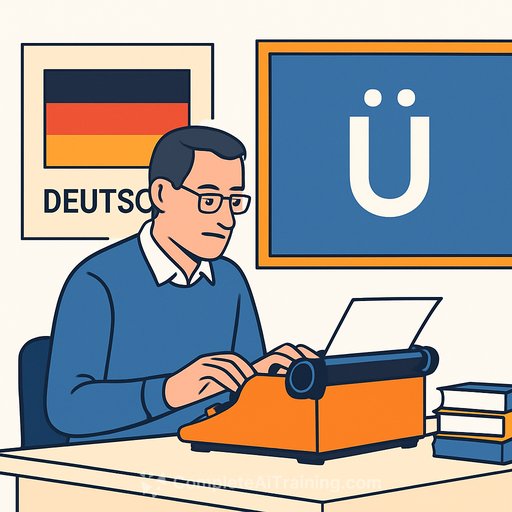
Grit Matthias Phelps, a German language instructor at Cornell University, requires her students to complete one assignment each semester on manual typewriters - no screens, no spellcheckers, no delete keys. The exercise started in spring 2023 after Phelps noticed students submitting grammatically perfect work written by AI and online translation tools.
"What's the point of me reading it if it's already correct anyway, and you didn't write it yourself?" Phelps said. She wanted students to experience what writing and thinking felt like before digital tools.
Phelps sourced dozens of old manual typewriters from thrift shops and online marketplaces. On assignment days, students arrive to find typewriters at their desks, some with German keyboards and some with QWERTY layouts.
The Learning Curve
For students raised on smartphones, the typewriter is counterintuitive. Catherine Mong, a 19-year-old freshman, had seen typewriters in movies but didn't understand how they worked. Phelps demonstrated how to feed paper manually, strike keys with force, and use the carriage return - a mechanical necessity that explains why the computer key is named that way.
Most students lacked the finger strength for touch-typing and instead pecked at keys with their index fingers. Mong, who had a broken wrist, typed with one hand and embraced the resulting imperfections, even playing with spacing to create a visual style inspired by poet E.E. Cummings.
Fewer Distractions, More Thinking
Ratchaphon Lertdamrongwong, a sophomore computer science major, noticed the shift immediately. Without notifications, he couldn't multitask. Without instant answers, he asked classmates for help - something that rarely happens in modern classrooms where students stay on laptops.
"I was forced to actually think about the problem on my own instead of delegating to AI or Google search," he said.
The absence of a delete key changed his approach to writing. Without the ability to erase mistakes, he paused to think more intentionally about what he wanted to say.
A Broader Trend
Typewriter assignments remain rare outside Cornell. But schools nationwide are adopting older testing methods - pen-and-paper exams and oral tests - to prevent students from using AI on laptop-based work.
Phelps brings her two children, aged 7 and 9, to serve as "tech support" during assignments and ensure no one has phones out. She frames the exercise as a way to understand how people once worked: focused on one task, with time to think, and without constant digital interruption.
For more on how educators are addressing AI in classrooms, see our AI for Education coverage and AI Learning Path for Teachers.
Your membership also unlocks: