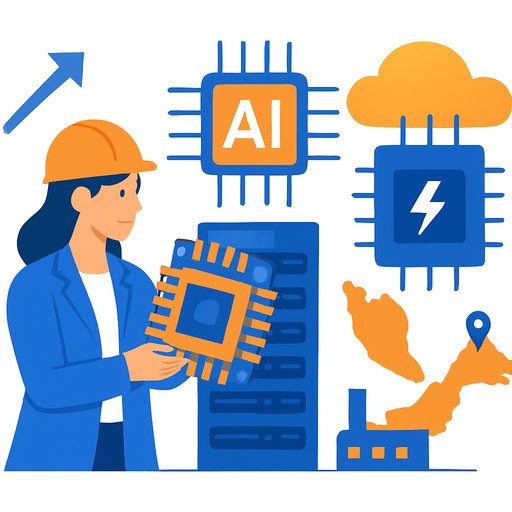
Corning eyes data-center expansion with shift into AI server components
Corning is repositioning its materials business to supply components for AI servers, a move that could reshape how data centers manage energy consumption and source critical parts.
The shift reflects broader changes in data-center infrastructure as companies build out systems to handle AI workloads. Corning's expertise in optical materials and advanced glass positions it to compete in advanced packaging-the technology that connects chips more efficiently and reduces heat generation.
Data-center operators face mounting pressure to cut energy costs as AI systems consume more power. Better packaging materials directly affect thermal performance and power efficiency, making them central to infrastructure planning.
Corning marks its 175th anniversary this year with a track record in materials innovation. The company contributed to Thomas Edison's light bulb development and later drove the optical fiber revolution that enabled modern telecommunications.
Supply-chain implications
The company's entry into AI server components could concentrate sourcing decisions among fewer vendors. This matters to executives managing procurement and supply-chain risk, particularly as geopolitical tensions complicate sourcing from Asia.
Corning has signaled investment commitments in China despite U.S.-China tensions, suggesting the company plans to maintain dual sourcing strategies. That approach carries regulatory and operational complexity for customers dependent on its materials.
The broader industry is consolidating around advanced packaging as a critical bottleneck. Nvidia has narrowed its circuit board partners to three amid packaging constraints, indicating that material suppliers now sit at the center of AI infrastructure buildout.
What executives should track
Watch how Corning's pricing power shifts as data-center builders compete for limited advanced packaging capacity. Material costs directly flow into server expenses and, ultimately, the economics of AI deployment.
Monitor whether the company's dual-geography strategy creates supply-chain fragmentation for customers. A split between U.S. and China manufacturing could force enterprises to choose between cost and geopolitical risk.
For those evaluating AI infrastructure investments, Corning's moves signal that materials science and manufacturing capacity-not just chip design-will constrain AI deployment speed through 2026 and beyond.
Learn more about AI for Executives & Strategy and AI for Operations to stay current on infrastructure decisions affecting enterprise AI deployment.
Your membership also unlocks: