Federal Court Orders Insurer to Disclose How It Uses AI to Deny Claims
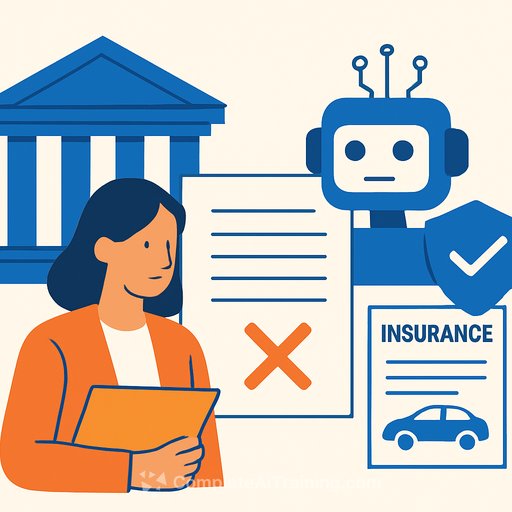
A Minnesota federal court has ordered UnitedHealth Group to produce documents detailing how it uses artificial intelligence to evaluate and deny insurance claims. The ruling in The Estate of Gene B. Lokken v. UnitedHealth Group, Inc. establishes that insurers cannot shield their AI decision-making from discovery in litigation.
The plaintiffs alleged that UnitedHealth denied claims using an AI program called nH Predict without meaningful human review. When the insurer refused to produce related documents, the court sided with the plaintiffs and granted a motion to compel discovery.
The decision applies far beyond health insurance. Courts are beginning to treat AI systems used in claims evaluation the same way they treat other business processes-subject to scrutiny in litigation. For insurers and policyholders alike, this signals a shift in how coverage disputes will be litigated.
What the Court Required
The court granted broad discovery into the insurer's use of nH Predict. It ordered production of documents showing how the AI program works, its development goals, and whether it was designed to replace physician decision-making.
The court also required disclosure of:
- Employee training materials on AI use
- Government investigations into the insurer's AI practices
- Identities of certain employees involved in claim denials
- Policies and procedures for post-acute care evaluation
The insurer successfully blocked some requests, including those seeking internal investigation files and financial data about AI benefits. But the core discovery-how the AI actually works and whether it supplanted human judgment-went through.
Why This Matters for Insurance
The ruling establishes that policyholders can now routinely request discovery into how an insurer uses AI to evaluate their claims. This includes AI chat files, use policies, and documents about AI oversight.
The court's reasoning extends to all insurance types. In a property or liability claim, a policyholder could seek discovery into whether AI replaced an adjuster's decision-making authority. If an insurer denies a claim based solely on AI output with no human verification, that could constitute bad faith-especially if the AI made an error.
Insurers must still make reasonable, fact-based decisions on each claim. Using AI does not change that obligation. If an AI system produces a hallucination or error that goes uncaught by human review, and that error leads to a wrongful denial, the insurer's use of AI becomes evidence of bad faith conduct.
A Broader Pattern in Courts
This is the second recent federal court decision allowing discovery into AI use. In a separate case, the Southern District of New York held that AI chat files are not privileged and must be produced in discovery.
The reasoning is straightforward: if an AI platform's terms of service allow the developer to share user data with third parties, the user has no reasonable expectation of confidentiality. That breaks the privilege protection.
The pattern suggests courts will continue opening AI systems to discovery as litigation increases. Companies should assume that any information entered into an AI platform-including sensitive or privileged material-may eventually be disclosed.
What Insurers and Policyholders Should Do Now
Insurers should review how they retain and delete AI chat records. Failure to preserve relevant AI documents could result in discovery sanctions or adverse inferences at trial.
Policyholders should make AI discovery a standard part of every coverage dispute. Ask for the other side's AI chat files, use policies, and related documents. Depose company employees about how AI was used in the claim decision. If AI played a role in denying your claim, you have a right to know what it said and whether a human actually reviewed it.
Both sides should also think twice before entering sensitive information into AI platforms without safeguards. Once it's in an AI system, controlling where it goes becomes much harder.
For more on AI for Insurance and AI for Legal practices, see our training resources.
Your membership also unlocks: