Covasant Launches CAMS to Bring Order and Accountability to Enterprise AI Agents
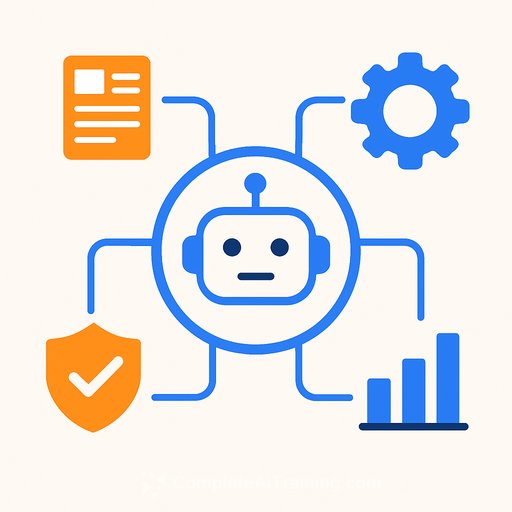
Covasant Technologies has introduced the Covasant Agent Management Suite (CAMS), a platform that gives enterprises the governance and operational controls they need to run AI agents at scale. As companies move from pilots to autonomous digital workforces, CAMS focuses on end-to-end lifecycle oversight-so agents don't drift, break compliance, or burn budgets.
"AgentOps is the new strategic imperative. Agentic AI represents the next great inflection point in enterprise automation, but it introduces complex challenges of governance, accountability, and multi-vendor interoperability," said ReddyRaja Annareddy, CTO, Covasant Technologies. "With CAMS, we aim to empower global organisations to move beyond simple automation towards true intelligence, where AI autonomously drives measurable business outcomes."
Referencing Gartner, Annareddy noted that 33% of enterprise software applications are expected to include agentic AI by 2028, yet 40% of initiatives could fail by 2027 due to weak lifecycle management and governance. The risks are clear: system drift, poor accountability, prompt injection, and audit gaps.
Srikanth Chakkilam, CEO and Executive Director, added that leaders are optimistic about agentic AI but cautious about controlling it at scale. CAMS addresses the operational question head-on: how to keep agents secure, compliant, and effective over their entire lifecycle-across clouds and vendors.
Why this matters for management
Agentic AI isn't a side project anymore-it's moving into core operations. Gartner's outlook underscores the urgency, and it aligns with what most boards want: tangible outcomes, clean risk posture, and clear accountability. Gartner
- Key risks without control: system drift, unclear decision accountability, prompt/data injection, audit failures, cost overruns, and vendor lock-in.
- What boards will ask: who's accountable for agent decisions, how incidents are contained, and how compliance is proven-on demand.
What CAMS brings to the table
- Lifecycle governance: registration, approval, versioning, rollback, and deprecation of agents.
- Policy and access controls: role-based permissions, guardrails, data boundaries, secrets management.
- Observability and audit: telemetry, decision logs, traceability for internal and external audits.
- Risk and compliance: pre-flight checks, human-in-the-loop steps, incident response workflows.
- Vendor independence: multi-model, hyperscaler-agnostic approach to avoid lock-in.
- Cost and performance management: budgets, quotas, SLAs, and KPI tracking by use case.
90-day rollout plan (practical and low-friction)
- Days 0-30: Inventory current and planned agents, define an AgentOps steering group, classify risks, set baseline policies, and agree on success metrics.
- Days 31-60: Pilot 2-3 high-value processes, integrate IAM and key management, enable full logging and audit trails, and add human approval for sensitive actions.
- Days 61-90: Expand to more use cases, introduce budget controls and SLAs, simulate an audit, and run red-team tests for prompt injection and data leakage.
Questions every executive should ask now
- Which business outcomes will agents own this quarter, and how will we measure them?
- What is our policy for approvals, rollbacks, and incident handling when agents misfire?
- Can we produce a clean audit trail of agent decisions-per request, per model, per vendor?
- How will we avoid lock-in while meeting performance, cost, and compliance needs?
- Do we have the skills and training pipeline to operate AgentOps at scale?
For leaders building a governance foundation, the NIST AI Risk Management Framework is a helpful reference for policy and control design.
If you're upskilling teams for AgentOps, explore role-based learning paths such as the AI Learning Path for Project Managers or the AI Learning Path for Regulatory Affairs Specialists to strengthen rollout governance, risk monitoring, and compliance skills.
Bottom line: agentic AI is moving fast, but control beats speed. CAMS gives management a clear way to scale outcomes while staying compliant, accountable, and vendor-flexible.
Your membership also unlocks: