Creators speak with one voice on AI: protect copyright, require licences
Published: Monday, December 15, 2025
The Government has released an interim statement on Artificial Intelligence and copyright. A full economic impact statement and a report on copyright and AI are due by 18 March 2026 under the Data (Use and Access) Act.
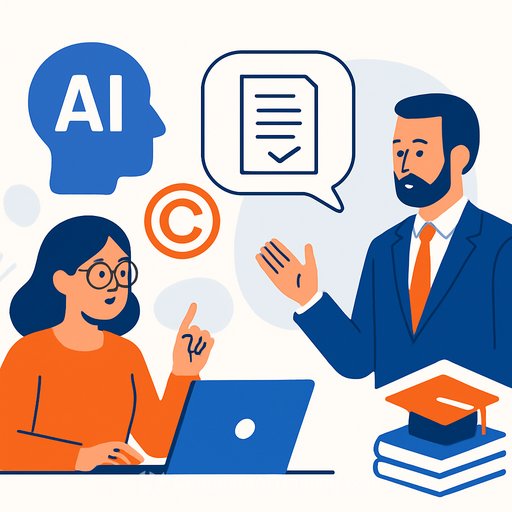
Earlier this year, Ministers floated an 'opt out' approach for AI training. Writers and wider creative industries rejected it. The message is simple: protect existing copyright, require explicit consent, ensure payment, and add transparency so creators can see when their work trains large language models.
What the consultation showed
Over 11,500 people responded to the Government's consultation (more than 10,000 via Citizen Space). The results were decisive.
- 88% backed Option 1: require copyright licences in all cases.
- 7% supported Option 0: make no changes to copyright law.
- 3% supported Option 3: a copyright exception for all text and data mining with rights reservation.
- 0.5% supported Option 2: a copyright exception for all text and data mining with no rights reservation.
- 1.5% did not indicate a preferred option.
There was also strong support for statutory transparency measures so licensing can work in practice and creators can trace how their work is used in AI training.
Why this matters for writers
Mandatory licensing and opt-in consent mean your work isn't treated as free input for AI systems. If your writing trains a model, you should know, you should agree, and you should be paid.
An opt-out weakens your position and shifts the burden onto you. An opt-in model keeps control where it belongs: with the creator.
What industry voices are saying
"It's loud and clear, there is widespread opposition from the creative industries to the Government's initial preferred option of an 'opt out' and a copyright exception for text and data mining. If we are to see an end to the industrial-scale theft of writers' and other creators' work, and to protect the creators and creative industries of the future, then UK copyright needs to be enforced not weakened. We will see whether Ministers have been listening when they come back with their full report next year."
Writers' groups say they'll stay active in consultations and working groups to defend rights and fair remuneration.
What to watch next
Ministers must publish the full economic impact statement and the copyright-and-AI report by 18 March 2026. That will signal whether the Government backs the clear majority view: licences, consent, payment, and transparency.
What you can do now
- Audit your catalogue: list what you own, where it's published, and existing licence terms.
- Prepare standard AI training licence terms: consent, scope, duration, territory, attribution, audit rights, and fees.
- Add explicit AI clauses to new contracts (and amend templates): training, synthetic outputs, and derivative use.
- Track usage: keep records of where your work appears online and in datasets when disclosed.
- Support transparency: back registries and dataset disclosures that let creators verify use.
- Respond to consultations and coordinate with your professional bodies; numbers matter.
If you want structured learning on practical AI for writing and content workflows (without giving up your rights), explore curated options by role such as the AI Learning Path for Data Scientists.
Your membership also unlocks: