
AI news ·
Critics say AI models replicate colonial patterns by extracting data from marginalized groups without consent
AI models trained mostly on Western data erase cultural nuance and spread stereotypes about non-Western communities. Researchers compare unconsented data collection from Indigenous groups to historical colonialism.
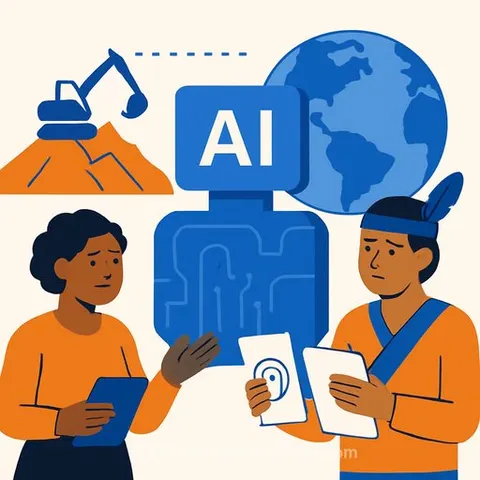
AI Training on Western Data Perpetuates a New Form of Colonialism
Large language models trained primarily on Western sources are erasing cultural nuances and flattening the diversity of non-Western communities, according to researchers and Indigenous leaders. The practice of harvesting data without consent from marginalized groups mirrors historical colonialism, where profits flow to tech companies instead of nations.
Most mainstream AI models are trained on work by Western writers-particularly white men-and absorb their values, writing styles, and biases. Data collection from Indigenous groups and communities of color often happens without their consent or verification of accuracy.
The Scale of the Problem
Large language models are built primarily by Western, Educated, Industrialized, Rich, and Democratic societies. They pull training data from social media, websites, news archives, and digitized materials that originate largely in North America and Europe.
This skewed training data produces measurable errors. When asked about Indian cuisine, AI models describe all Indian food as "rich and aromatic and spicy," according to Aditya Vashistha, a professor at Cornell University. The reality is far more varied. Regional cuisines differ significantly in spice selection and amounts used.
These inaccuracies persist even as tech companies invest in training models with more diverse data sources.
A Colonial Framework
Researchers frame data extraction as a continuation of colonial practices. "Colonialism is always portrayed as something that happened in the past," said Julian Posada, a Yale professor who studies the relationship between human labor and data production. Modern colonialism still exists, but people often fail to recognize it.
Nick Couldry, co-author of "Data Grab: The New Colonialism of Big Tech and How to Fight Back," described data seizure as a "deeply colonial act." The logic mirrors historical conquest: take what exists, claim entitlement to it, and extract maximum profit.
Speed Over Consultation
Tech companies racing to compete with Chinese competitors skip the costly, time-consuming work of consulting Indigenous communities. Michael Sherbert, an Algonquin of Pikwàkanagàn First Nation and fellow at Queen's University, said the pressure to move fast exacerbates the problem.
Brian Ritchie, founder of kama.ai and a member of Ontario's Chapleau Cree First Nation, has attended numerous summits with Indigenous leaders. He said he has not "seen any history where indigenous people have been involved" in training AI systems.
Knowledge Systems Left Behind
Many Indigenous traditions don't appear in AI training data because they're passed down through oral history rather than written text. Other knowledge is intentionally kept private within communities.
The absence matters beyond accuracy. "These systems, the answers that these LLMs are giving, are increasingly shaping how people understand themselves, culture, history, identity, and even what's true and legitimate," Sherbert said.
For writers using generative AI and LLM tools, understanding these biases is essential. The AI tools writers rely on encode the worldviews of their training data, affecting how stories about non-Western cultures get told.