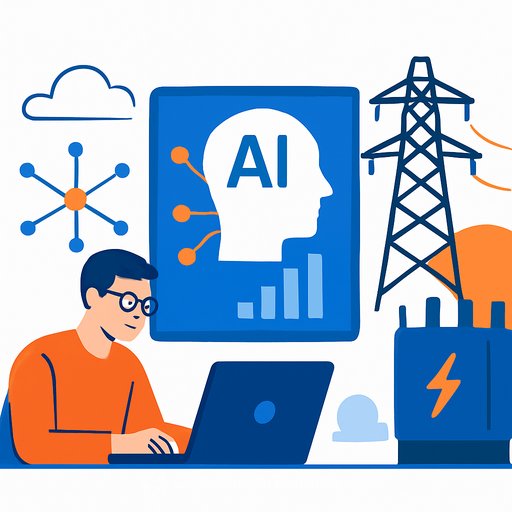
Power grid framework coordinates transmission and distribution without central control
Colorado State University researchers have developed a system for coordinating power grid operations across traditionally separate departments, addressing inefficiencies that emerge as solar panels, electric vehicles, and other distributed energy sources proliferate across the grid.
The framework, published in Scientific Reports, allows transmission and distribution operators to make joint decisions without requiring centralized control. Professor Zongjie Wang, director of CSU's Grid Modernization Initiative, led the research.
The coordination problem
U.S. power grids have operated in silos for decades. Utility companies manage distribution systems-the local networks that deliver power to homes and businesses-while separate operators handle transmission systems that move power across regions. The two sides rarely coordinate.
This separation worked when energy sources were centralized power plants. It breaks down when thousands of customers install solar panels or charge electric vehicles simultaneously, creating unpredictable flows of power that affect both distribution and transmission operations.
"Industry leaders often lack system-level visibility into how distribution-level resources impact transmission operations," Wang said.
How the framework works
Wang's approach uses reduced distribution network models-simplified mathematical representations of local grid behavior-to combine data from both systems. AI-powered modeling accounts for uncertainties and complexities, giving operators better information for dispatching electricity.
The system provides more accurate dispatch decisions while keeping transmission and distribution operators independent. Neither side needs to cede control to a central authority.
The framework addresses immediate operational challenges: weather-related outages, rising energy costs, and growing demand. It also accounts for newer threats like cybersecurity vulnerabilities and climate-related disasters.
Potential cost reductions
Better coordination between transmission and distribution reduces inefficiencies and system costs. Those savings eventually reach consumers through lower electricity rates.
The research is part of broader efforts to build grids that remain reliable as they integrate more renewable energy sources and distributed resources. Wang's work offers a concrete path for utilities to improve coordination without restructuring their organizations.
Learn more: Explore AI research applications or read about AI and optimization frameworks that solve complex coordination problems.
Your membership also unlocks: