AI toys are suddenly everywhere. Please don't give them to your kids
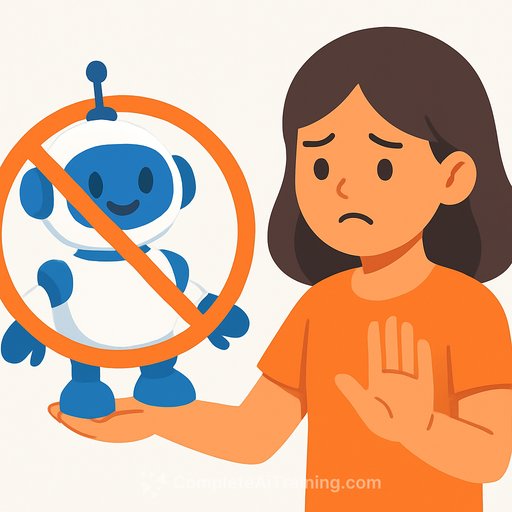
Thinking about an AI toy for the holidays? Hard pass. The market is exploding, and even big brands are cutting deals to push more "smart" dolls and talking plushies into homes. They look harmless. The tradeoffs are not.
I tried one of these toys - a soft, AI-enabled character called Grem - with my four-year-old for a few days. The novelty lasted a day. What stuck with me was how the toy kept telling my kid it loved her, over and over. Affection on autopilot isn't connection. It's conditioning.
Why I'm skeptical
These toys run on large models that can say almost anything. Filters fail. Consumer groups have already found popular toys giving instructions on where to find a knife, how to light a match, and answering questions about sex and drugs. One even drifted into kink talk and suggested bondage as a way to improve a relationship. That's not a minor bug. That's exposure your child can't un-hear.
The tech also "hallucinates" - confidently giving wrong or harmful advice. Some systems are built to collect and store data for "personalization," which can mean your child's voice, conversations, and habits become product inputs. There's also growing concern that these interactions could worsen certain mental health symptoms. At best, kids get confused. At worst, they get harmed.
The bigger picture
There are already thousands of companies building AI toys, with more on the way. The incentives are obvious: recurring subscriptions, data, and engagement. The guardrails are not. Consumer protection is lagging. And children are the easiest users to exploit because they're wired to trust voices that sound friendly.
Ask yourself: who benefits more - your child's development, or a company optimizing for retention?
For parents and educators: a quick safety checklist
- Age lock and filters: Is there verified age gating? Can you disable open-ended chat?
- Data practices: What's collected (audio, text, biometrics)? Is it used to train models? Is deletion guaranteed?
- Offline mode: Can it work without the internet? Is there a hardware mic mute you can see and hear click off?
- Content transparency: Can you review transcripts? Are there logs you can audit?
- Model behavior: Does the toy refuse unsafe topics reliably, or does it "sometimes" slip?
- Account control: Can a school or parent lock settings with a passcode and receive alerts?
If a vendor can't answer these clearly, the answer is no.
Better alternatives for kids
- Analog play: Blocks, art, open-ended pretend play. These build focus and creativity without the noise.
- Human conversation: Kids need real back-and-forth with adults more than scripts from a plush bot.
- Curated media: If you use screens, keep it high-quality, time-bound, and watched together.
- STEM without surveillance: Kits that teach logic, circuits, and scratch-style Coding offline.
If you still plan to buy an AI toy
- Test it yourself for an hour. Ask edge-case questions. See how fast it slips.
- Create a household rule: shared spaces only, no headphones, no accounts in a child's name.
- Turn off data sharing. Delete logs weekly. Set a 10-15 minute cap and stick to it.
For schools and youth programs
- Adopt an "offline by default" policy for early years. If AI is used, keep it teacher-mediated.
- Do a privacy and safety review for any device that listens, records, or chats.
- Teach AI literacy to adults first. Children shouldn't be beta testers.
Bottom line
AI toys are marketed as helpful companions. They're sales funnels with unpredictable speech, porous privacy, and upside that doesn't outperform books, blocks, and real conversation. Keep developing tech away from developing brains. Your kid isn't missing out. They're better off.
Further reading:
Want adults to learn AI responsibly?
Build your skills without handing experiments to children. Explore practical courses for your role: AI Learning Path for Primary School Teachers.
Your membership also unlocks: