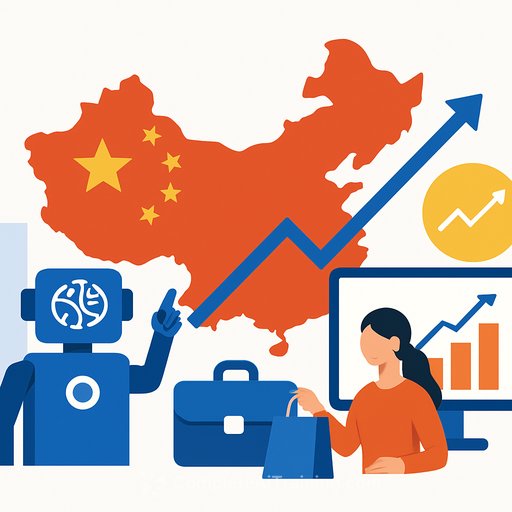
Data-Driven China: How AI and Alternative Signals Are Reframing Market Intelligence
At the Hubbis Investment Forum - Hong Kong 2025, a clear theme cut through the noise: AI engagement data is becoming a frontline indicator for demand in China. Instead of relying on lagging reports, marketing and growth teams can now read the market in real time through mobile usage, platform activity, and foot traffic.
The message was simple and useful. Track where attention moves, connect it to business signals, and act faster than your competitors. For practical resources and examples, see AI for Marketing.
Why this matters for marketers
- AI usage is surging: Apps like Doubao and Tencent Yuanbao are pulling in massive MAUs and shifting consumer behavior across content, search, and utility.
- Platforms are diverging: Tencent leans into 3D assets, Alibaba into trillion-parameter models for commerce and cloud, Bytedance into infrastructure and robotics. Your channel mix should reflect those strengths.
- Market momentum confirms demand: AI-linked A-share themes are leading returns, with optical chips and communications out front. Where investors focus, budgets follow.
- Alternative data delivers signal: Offline scale and online activity indices correlate with listed company revenue. These same signals can guide campaign timing, retail activations, and creative testing.
- Retail investor activity is back: Engagement on Tonghuashun and East Money climbs with index rallies-use it as a sentiment gauge for PR and brand storytelling.
The macro shift: slower speed, stronger structure
China's Q3 2025 GDP eased to 4.8 percent, with drag from real estate and softer confidence. The focus is now "consolidating economic foundations and planting long-term fertility."
Translation for marketers: growth is uneven, but AI-linked sectors are expanding. Budget to the green shoots, not the averages.
Platform engagement is the new "market relevance"
MoonFox Data tracks usage across 1.46 billion monthly active devices and 1.8 million apps via SDK data. In Q3, generative AI stood out.
Doubao pushed toward 200 million MAUs in October, helped by clean UI and broad appeal. Tencent Yuanbao surged by riding WeChat distribution-proof that ecosystem access beats features alone when you're after scale.
Big Tech AI strategies-and what to do with them
- Tencent Hunyuan: Fast iterations in 3D asset generation support gaming, virtual goods, and immersive brand moments. Consider 3D-ready creative pipelines and partnerships for interactive campaigns.
- Alibaba Qianwen: A foundational model aimed at commerce and cloud. Expect tighter ad products, smarter recommendations, and retail media plays across the Alibaba stack.
- Bytedance Doubao + Seed: Popular consumer AI paired with infrastructure efforts (FutureX, Robix). Anticipate performance-focused tools and new ad surfaces tied to AI utilities across the Bytedance ecosystem.
From screens to stocks: proof of demand momentum
AI concepts led A-share performance through Q3 2025, with optical chips and communications topping gains. Whether you cheer or question the hype, the attention is real-and it drives spend in related categories.
Retail trading activity rose in sync with index moves, especially after the 3800 level. Treat this as a live sentiment barometer for launches, PR cycles, and influencer pushes. For context on A-share exposure, see the MSCI China overview.
Alternative data: a practical playbook for marketing
MoonFox's three-step approach maps neatly to marketing operations:
- Collect: Online (app usage), offline (foot traffic), and transactional data by product and region.
- Model: Translate raw signals into DAU, session depth, repeat visits, and revenue proxies.
- Map: Connect outputs to brands, SKUs, and channels to trigger media, creative, and retail actions.
How to use it right now:
- Track weekly share of engagement for your category across Doubao, Yuanbao, and core social apps; shift spend to the rising tide.
- Anchor launches to WeChat entry points if you target Yuanbao users; distribution density wins.
- Use foot-traffic surges to time pop-ups, demos, and OOH; retarget exposed audiences within 48 hours.
- Correlate platform activity with sales or lead flow; turn outliers into testable hypotheses, not anecdotes.
- Let large models draft creative variants, then A/B them against segments tied to each platform's behavior graph (explore the AI Learning Path for Social Media Coordinators).
Two signals marketers can copy
BYD - Offline Scale Index: Foot traffic around B2B and retail touchpoints moved in step with revenue. For retail brands, mirror this with store visits, showroom dwell time, and test-drive bookings; trigger local ads and influencer drops where momentum spikes.
Pop Mart - Online Activity Index: App and digital engagement lined up with quarterly revenue. If you sell to Gen Z, tie limited releases to engagement bursts, then ride the wave with paid social and creator collabs within the same 72-hour window.
30-60-90 day action plan
- Next 30 days: Pick five signals (two online, two offline, one sentiment). Build a simple weekly dashboard. Run one timing test based on signal peaks.
- Next 60 days: Feed these signals into your media mix model. Stand up a WeChat-first funnel if Yuanbao users are core. Pilot 3D assets for one product line.
- Next 90 days: Make signal-driven planning your quarterly ritual. Tie OKRs to lift from signal-triggered campaigns. Formalize a creative testing loop with AI-generated variants.
Skills that pay off here
If your team needs a fast, practical ramp on AI for marketing workflows, this certification is a strong starting point: AI Certification for Marketing Specialists.
Bottom line
Attention is moving. AI platforms are where users spend time, and alternative signals now forecast demand. Build your plan around engagement data, ship faster, and let the market tell you what deserves more budget.
Your membership also unlocks: