How data, voice bots, and vernacular AI can open up insurance access in India
Across India, people don't reject life and health cover. They reject confusion. English-heavy forms, complex terms, and opaque processes block intent. AI can remove that friction without removing the human touch.
Three pieces matter: data that adds context, voice bots that never get tired, and vernacular AI that speaks the way people think. Put them together and coverage becomes simple, fair, and available everywhere.
The blocker isn't price. It's clarity
Many prospects say "I can't afford it," but the real message is "I don't get it." If a critical illness plan still sounds like a tax document after three explanations, the sale is lost. Simplify the language, the steps, and the decision - adoption follows.
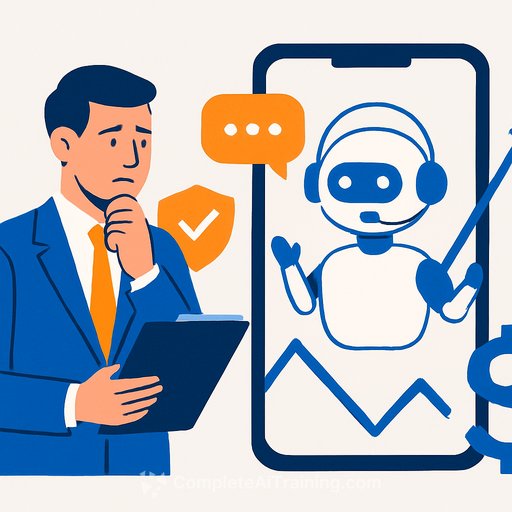
Voice bots reduce friction and build trust
Modern voice bots don't sound like IVR trees. They answer like a patient rep who never rushes, never judges, and never puts a caller on hold. A caller can ask about pre-authorizations or claim steps in Bundeli, and get clear answers in Bundeli - start to finish.
Consistency creates trust. If every question gets a straight answer in plain speech, people open up, ask more, and buy with confidence.
Vernacular AI speaks the way people think
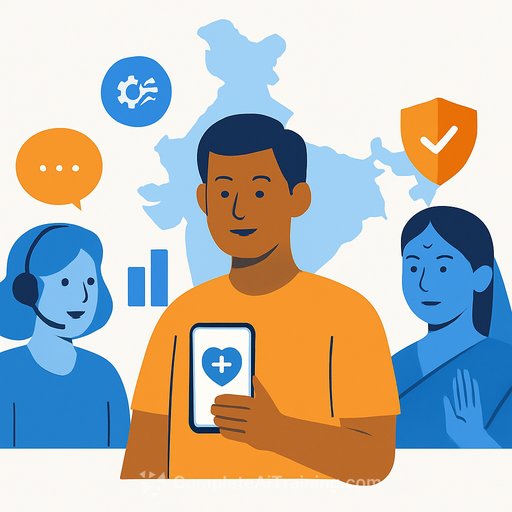
Most Indians think in their mother tongue and translate on the fly. Insurance materials in English create distance. Vernacular AI flips that script with local language, local examples, and short sentences.
This is more than customer service. It's respect. Speak to people in the language they use at home and adoption climbs.
Data makes offers fair and service personal
Context makes decisions better. Data shows which districts lack coverage, which occupations need micro-covers, where chronic illnesses cluster, and who prefers voice over text. Use that context to shape products, nudge wellness, and plan distribution without bias.
Fraud analytics, segmentation, and demand mapping are the same muscles. Apply them to pricing, claims triage, and outreach so each person gets a clear, relevant next step - not a generic menu.
Policy wording: simplify without losing accuracy
Policy language is hard because life is messy - exclusions, waiting periods, documentation, disclosures. Generative AI can translate legalese into conversational FAQs, highlight exclusions, and surface "what's covered vs. what's not" in one view.
The result: less guesswork, fewer disputes, and faster claim decisions because expectations are aligned upfront.
Distribution without distance
Agents and branches can't reach every village. Voice and vernacular AI can. A toll-free line or WhatsApp entry point can quote, explain, onboard, and hand off to a human only when needed.
Coverage stops being a city product. It becomes a service available anywhere a phone signal exists.
Guardrails that keep trust intact
- Explainability: every answer and action should have a plain-language rationale.
- Consent and choice: offer a human handoff at any point.
- Bias checks: test pricing, claims, and routing for unfair outcomes by segment and region.
- Audit trails: log prompts, responses, and decisions for compliance review.
- Privacy and security: align with IRDAI guidance and India's data protection rules.
For regulatory context, see the IRDAI and India's data protection framework at the Ministry of Electronics and IT here.
A 90-day build plan
- Pick two use cases with clear ROI: claims FAQs and pre-issuance Q&A.
- Launch one language with high inbound volume (e.g., Hindi) and one regional language with low agent coverage.
- Create an intent library: top 200 customer questions, mapped to approved answers and escalation rules.
- Integrate with policy admin and CRM for real-time status checks and call summaries in the customer record.
- Add human handoff via warm transfer, with the bot posting a short case summary to cut handle time.
- Run red-team tests for prompt injection, misinformation, and bias before scaling.
What to measure
- Coverage adoption: quotes issued, policies bound, first-premium conversion by language and channel.
- Understanding: "teach-back" score - can customers explain key benefits and exclusions in one sentence.
- Service: first contact resolution, average handle time, containment rate, and handoff success.
- Trust: complaint rate, dispute rate on claims, NPS/CSAT by intent and language.
- Claims: TAT, document completeness at first upload, and fraud false-positive rate.
What good looks like
- Plain speech as the default. Legal detail on tap, not in the way.
- Every script and response available in major regional languages with examples that feel local.
- AI doing the heavy lifting, humans handling edge cases and empathy moments.
- Clear governance so innovation never outruns trust.
If your teams need AI fluency
Upskill distribution, service, and claims teams to work effectively with voice and generative systems. A practical place to start: AI courses by job role.
Bottom line
People across India want protection. Give them clarity in their language, patient conversations over voice, and products informed by real context - and they will say yes. AI doesn't replace the human promise of insurance; it helps you keep it at scale.
Your membership also unlocks: