
AI news ·
Deepfake videos of Taylor Swift and Rihanna promote fake TikTok payment scam
Deepfake videos of Taylor Swift, Ariana Grande, and Rihanna are spreading on TikTok, pushing a fake "TikTok Pay" scheme that steals personal data. The AI-generated clips use real interview footage overlaid with the TikTok logo to appear legitimate.
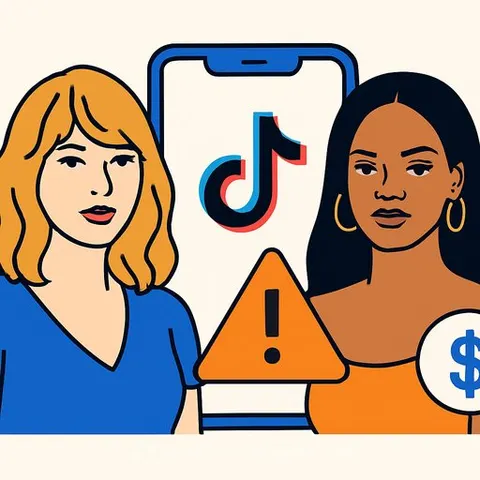
Fake Taylor Swift TikTok Scam Shows How Deepfakes Target Your Data
Deepfake videos of Taylor Swift, Ariana Grande, and Rihanna are circulating on TikTok, promoting a fake money-making scheme called "TikTok Pay." The videos use AI-generated likenesses to convince users the celebrities are endorsing a get-rich-quick service that claims to pay for watching videos and leaving feedback.
Users who fall for the scam share personal information while signing up. The deepfakes pull audio and video from real interviews and red carpet footage, then overlay the TikTok logo to create a veneer of legitimacy.
The Technical Reality
The AI quality is imperfect. The voices sound robotic and the visuals show uncanny glitches. But heavy filter effects obscure these flaws enough to fool people scrolling quickly through their feeds.
AI detection company Copyleaks identified the fraudulent videos. In one fake Rihanna clip, the deepfake says: "You literally just watch content and give your opinion." A fake Taylor Swift reassures viewers: "if the page opens for you, don't overthink it."
A Pattern, Not an Isolated Incident
This isn't new. Last year, similar deepfakes showed Taylor Swift promoting Le Creuset Dutch ovens for the same purpose-collecting personal data under false pretenses.
As generative video technology improves, these scams will become harder to spot. The filtering and production quality will only get better.
What Creatives Need to Know
For creators and designers, this matters. Deepfakes blur the line between authentic content and fraud on AI for Social Media platforms. Your audience may struggle to distinguish real endorsements from AI-generated ones.
Some detection tools exist-Copyleaks offers an AI image detector, and the "three-finger test" (looking for unnatural hand movements) can help. But these methods require active effort from viewers who are often distracted or rushing.
Swift and other celebrities are pursuing legal action against deepfake creators. The legal landscape around synthetic media remains unsettled, but the pressure is mounting.
For now, assume any celebrity endorsement you see on social media could be fake. Verify through official channels before trusting it.