Delhi's AI training programme launches across schools: timelines, roles, and what to do next
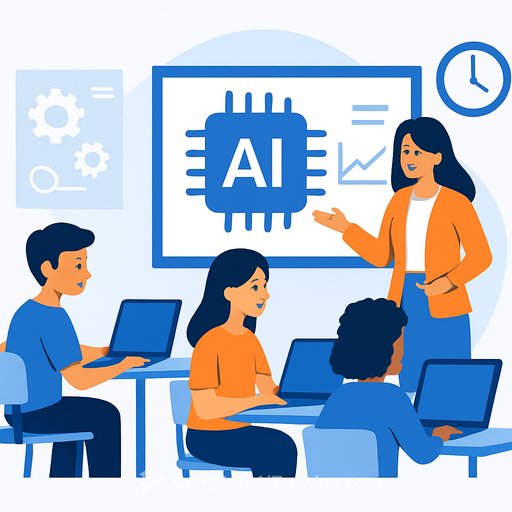
Delhi's Department of Education has launched a citywide AI training programme for students in grades 6-9 and grade 11. The initiative sits under the New Era of Entrepreneurial Ecosystem and Vision (NEEEV) and focuses on practical digital skills, creative problem-solving, and real-world use cases.
Rollout spans December to March across all education districts. Themes include mobility, logistics, sustainability, educational improvement, and public safety-clear problem spaces where students can apply modern tools with guidance.
Governance and support
Oversight is being led by Additional Director of Education KS Upadhyay, the nodal officer for the programme. Coordination runs across the Department of Education, the Higher and Technical Education department, and the ViSV foundation.
Mentorship is built in. School Innovation Councils (SICs) and designated NEEEV teachers will mentor participating students and support project development.
Key dates and structure
- School registration: All schools must register on the Delhi AI Grind portal.
- Campus ambassadors: Each school nominates five student ambassadors by 8 December.
- School-level sessions: "Mini grind" sessions begin 15 December, followed by internal evaluations.
- Selections: Successful teams progress to district-level and state-level rounds through March.
What students will actually do
Students will learn core AI concepts and then apply them to concrete challenges tied to city needs. Expect structured problem statements around traffic and mobility, supply chains, green practices, safer communities, and better learning outcomes.
The goal is simple: help students think clearly, prototype quickly, and test ideas that can work beyond the classroom.
Action checklist for school leaders
- Register your school on the Delhi AI Grind portal and confirm access for the designated coordinators.
- Nominate five campus ambassadors by the 8 December deadline and brief them on responsibilities.
- Confirm your SIC and NEEEV teacher mentors; assign a timetable for the "mini grind" starting 15 December.
- Prepare basic infrastructure: lab access, device availability, internet, and a simple submission workflow for evaluations.
- Set clear project guardrails: student safety, appropriate data use, and documentation standards.
- Plan internal reviews and feedback cycles to get teams ready for district and state selections.
Why this matters for administrators and teachers
This programme gives structure to a hands-on approach: short cycles, mentor feedback, and visible milestones. It also builds a pipeline from school projects to district and state showcases-useful for spotting talent and shaping future STEM and entrepreneurship efforts.
Where to find updates
- Department of Education, GNCTD: edudel.nic.in
If your staff wants supplemental upskilling to support student projects, you can browse role-based AI learning paths here: AI courses by job.
Bottom line: register, nominate, schedule, and mentor. Keep the first cycle tight and the goals clear. The rest builds from there.
Your membership also unlocks: