Denodo and ST Engineering team up to speed AI adoption in operations
On 5 Nov 2025, Denodo and ST Engineering Mission Software Systems signed a Memorandum of Understanding to push data science and AI deeper into operational workflows. The focus is clear: faster decisions, tighter integration, and smoother transitions from pilot to production.
Collaboration scope
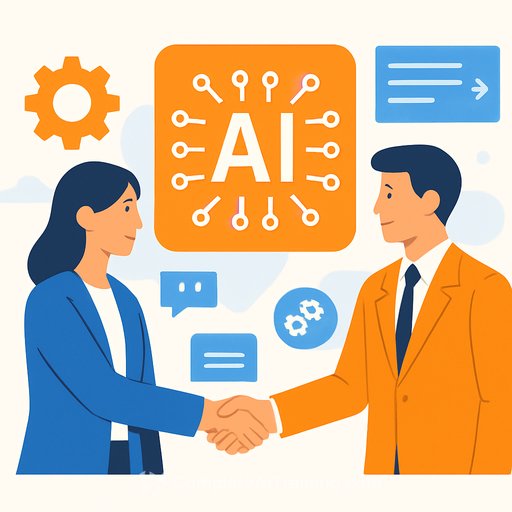
The agreement, signed by Richard Jones (Denodo, APAC VP & GM) and Percival Goh (EVP, Head of ST Engineering Mission Software Systems), sets out joint work across system and platform integration, prototype and proof-of-concept builds, and scaled rollouts. Both companies will also share know-how and coordinate technical partnerships to serve government and commercial clients.
Why this matters to operations
- Faster time to insight by connecting data where it lives instead of moving it around endlessly.
- A clear path from pilots to steady-state operations, reducing stalls between "demo" and "deployed."
- Lean budgets through reuse of existing data sources and infrastructure.
- Better confidence in decisions with governed, consistent data feeding AI models.
What each party will do
- Denodo: Lead on system and platform integration for data science and AI, co-develop prototypes and proofs-of-concept, track progress, and spot new opportunities that fit client needs.
- ST Engineering Mission Software Systems: Build and operationalise solutions, support early pilots, and ensure clean handovers from trials to full-scale production.
What leaders said
Richard Jones highlighted that effective data management enables AI-driven decisions that are quicker, smarter, and more cost-aware. He noted that combining ST Engineering's domain depth with Denodo's data management strengths sets up timely, high-impact decisions in day-to-day operations.
Percival Goh stated the collaboration is aimed at advancing AI-driven analytics so teams can turn complex data into clear, measurable outcomes for mission-critical environments.
Expected outcomes for ops teams
- Reliable access to governed data across systems without building fragile point-to-point links.
- Operational AI use cases that move beyond pilots: dispatch optimisation, predictive maintenance, workload planning, and risk monitoring.
- Shorter feedback loops between data teams and the field, improving model performance where it actually counts-on the ground.
Practical next steps
- List 3-5 decisions you make weekly that would benefit from fresher data or consistent metrics. Start there.
- Map core data sources (operational systems, sensors, logs, ERP/CRM) and identify quality or access gaps.
- Run a 6-8 week proof-of-concept with one high-value metric (e.g., on-time readiness, MTBF, SLA adherence) and instrument it end-to-end.
- Define the production path early: ownership, SLAs, monitoring, model refresh cadence, and rollback plans.
- Upskill the team on data products, prompt practices, and AI ops. If you need structured options, see our AI courses by job.
Learn more
The joint vision is straightforward: help organisations adopt AI and operational intelligence at pace, with efficiency, insight, and agility front and center. For operations leaders, the signal is strong-AI moves fastest when data management and domain expertise sit at the same table.
Your membership also unlocks: