Kaufman Development Breaks Ground on Detroit Micro Data Center, Building Out a National AI-Ready Platform
Kaufman Development has started construction on a next-generation micro data center (MDC) in Detroit. It's the first site in a planned series of distributed facilities meant to support AI inference, edge computing, and local digital infrastructure across the U.S.
The Detroit MDC sits within Project Zero, the company's push to deliver modular, scalable, and energy-efficient assets. The site was selected for strong power availability and regional connectivity, enabling low-latency compute for AI applications, enterprise workloads, smart-city systems, logistics, industrial automation, and telecom.
A New Category of Digital Infrastructure
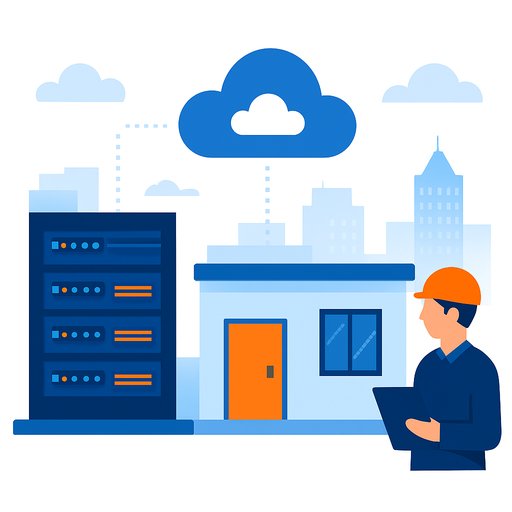
MDCs compress what matters in a data center into a smaller, modular form. They deploy in weeks, consume less land and energy, and can be placed on urban, commercial, or under-utilized parcels. For real estate and construction teams, that means faster timelines and more flexible site strategies.
- Edge proximity for real-time AI inference
- Reduced energy and land consumption
- Faster deployment cycles
- Flexible siting on urban, commercial, or under-utilized land
- Integrated cooling, UPS, security, and monitoring systems
As enterprises move to hybrid and edge-enabled architectures, MDCs serve as the "last-mile" link between national cloud networks and local users, devices, and sensors. For a deeper look at edge computing models and use cases, see LF Edge.
Why Detroit, and What It Enables
Detroit offers the right mix: a historic industrial base, an active innovation corridor, and dense advanced manufacturing. The MDC supports high-performance uses where latency and reliability matter.
- Automotive and autonomous systems
- Advanced robotics and industrial automation
- Smart manufacturing and predictive maintenance
- Transportation, supply chain, and logistics
- Public-sector and smart-city initiatives
- Regional AI startups and enterprise tenants
The facility is positioned to help the city modernize critical infrastructure while attracting investment tied to AI, mobility, and connected systems.
What This Means for Real Estate and Construction Teams
MDCs fit sites that traditional data centers overlook. Smaller footprints, modular builds, and standardized components open up infill, commercial, or surplus land that already sits near power and fiber. The path to revenue is shorter once utilities and permitting are in place.
- Site selection: Prioritize parcels with dependable utility access, nearby fiber routes, appropriate zoning, and clear ingress/egress for modular delivery.
- Power strategy: Plan for high-density racks and future liquid cooling. Evaluate substation capacity, onsite generation options, and microgrid compatibility.
- Permitting and neighbors: Early coordination with municipalities and utilities reduces delays. Sound, security, and traffic plans matter for urban placements.
- Commercial model: Multi-tenant edge, carrier-neutral connectivity, and AI inference clusters can create diversified, sticky tenancy.
Scaling a National Footprint
Kaufman Development plans additional MDCs in 2026 across key markets in California, Texas, Florida, the Midwest, and the Northeast corridor. Each facility follows a modular, repeatable prototype to speed replication, lower CapEx, and scale across multiple sites.
- Liquid-cooled racks for AI workloads
- Renewable-energy options and microgrid compatibility
- Multi-tenant edge platforms
- Carrier-neutral fiber connectivity
- High-density compute clusters
- Resilient security and remote management systems
Executive Perspective
"AI infrastructure is quickly becoming one of the most important real estate categories of the next decade," said Daniel Kaufman, President of Kaufman Development. "This new micro data center in Detroit reflects our commitment to building the real estate layer of the AI economy. As data and AI move to the edge, cities need smaller, faster, more flexible compute assets, and we are positioning Kaufman Development at the forefront of that transition."
Kaufman added, "Detroit is the perfect starting point for this platform. It is a city with deep industrial roots and an emerging innovation ecosystem, and the need for edge compute is accelerating across manufacturing, mobility, and public infrastructure. Our micro data center model allows regions like Detroit to capture that growth without waiting years for large-scale facilities to come online."
What to Watch Next
- Market rollout: Additional sites announced in 2026 across high-demand metros.
- Utility partnerships: Power availability and interconnection will drive site sequencing.
- Carrier and cloud on-ramps: Neutral connectivity will be a key draw for tenants.
- Data center specs: Liquid cooling and microgrid-ready designs to support dense AI clusters.
For more information, visit Kaufman Development.
If your team is building AI-enabled assets and needs a baseline on AI concepts that influence facility decisions (latency, model inference, data pipelines), see Complete AI Training by job role.
Your membership also unlocks: