Devin's Dawn: How Cognition Labs is Redefining Financial Services Workforces with AI
The financial services industry is facing a major transformation with the introduction of AI platforms like Cognition Labs' Devin. This technology promises to change how human workers operate while delivering significant productivity improvements. Goldman Sachs is among the first to adopt Devin, leveraging its autonomous code engineering, real-time collaboration, and seamless integration with enterprise tools. These features set new standards for AI's role in reshaping workforces in one of the most vital sectors.
The Devin Advantage: Productivity at Scale
Devin stands out for its ability to handle full engineering cycles—from coding and debugging to deployment—without human help. On the SWE-bench benchmark, Devin solved 13.86% of real-world GitHub issues, far surpassing the previous best of 1.96%. At Goldman Sachs, Devin is expected to take on routine tasks like updating legacy systems and migrating codebases, which could increase developer productivity by three to four times.
This boost in output could lead to lower costs and faster innovation, freeing human developers to focus on strategic challenges and compliance management. Goldman Sachs’ early adoption highlights the growing strategic importance of AI in financial services.
The Hybrid Workforce: Collaboration, Not Replacement
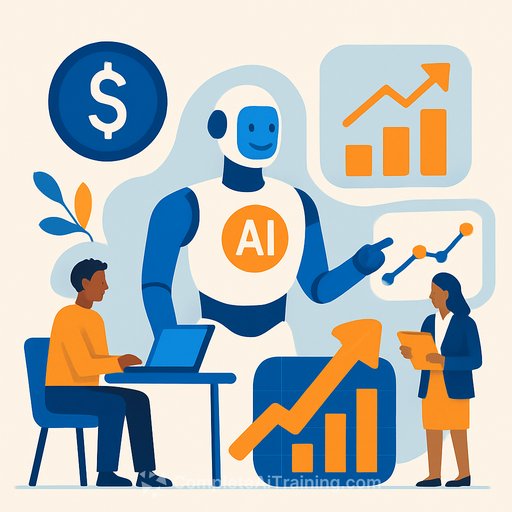
Cognition Labs positions Devin as a tool that enables a hybrid workforce rather than replacing jobs. By automating repetitive tasks such as bug fixes and code refactoring, Devin allows developers to take on roles that require human judgment—like system design, managing AI outputs, and ensuring regulatory compliance.
Goldman envisions a setup where humans supervise AI agents, fostering collaboration between creativity and efficiency. Still, projections estimate up to 200,000 banking job cuts by 2028, mainly in roles focused on repetitive coding and data entry. At the same time, demand will grow for professionals skilled in prompt engineering, AI oversight, and ethical governance.
This shift means organizations must invest heavily in upskilling programs and clarify regulatory frameworks around AI accountability.
Market Positioning and Competitive Landscape
Cognition Labs, valued at $4 billion and backed by investors like Founders Fund and Peter Thiel, leads in applied AI for engineering. Its strength lies in enterprise-ready integrations with platforms such as GitHub, AWS, and Slack. While competitors like OpenAI and Microsoft’s GitHub Copilot offer general AI assistance, Devin specializes in autonomous task execution, giving it an advantage in handling complex workflows.
Though still private, Cognition Labs’ valuation reflects strong investor confidence. Public companies like Palantir (PLTR) and MicroStrategy (MSTR) provide indirect exposure to AI-driven enterprise solutions but lack Devin’s coding-centric focus.
Risks and Ethical Challenges
Devin’s decision-making process operates largely as a "black box," which raises ethical concerns. Mistakes in financial systems could result in costly compliance violations, making rigorous oversight essential. Excessive dependence on AI could also introduce risks if models become outdated or biased.
Regulators will scrutinize AI's role in banking, challenging Cognition Labs to balance innovation with responsibility and transparency.
Investment Thesis: Riding the Hybrid Wave
Financial institutions adopting AI like Devin—such as Goldman Sachs, JPMorgan Chase (JPM), and Morgan Stanley (MS)—are poised to enhance operational efficiency and gain market share. Investors should focus on firms that invest heavily in AI research and development and have clear workforce reskilling plans.
Enterprise AI providers like Microsoft (MSFT) with GitHub Copilot and Salesforce (CRM) with Einstein offer indirect access to this productivity leap. Contrarian investors may consider AI talent plays like Snowflake (SNOW) and Databricks (DBKS), which provide the critical data infrastructure and platforms that support AI tools like Devin.
Conclusion: The Inevitable AI Workforce
Devin’s emergence signals a new phase for the financial services workforce. AI will increasingly handle mundane tasks, freeing humans to focus on strategic innovation. Despite challenges, the potential cost savings and productivity gains are significant and cannot be overlooked.
Investors should prepare for a future where AI collaboration becomes essential and allocate capital toward companies leading this change. Cognition Labs’ soaring valuation highlights the growing momentum. The AI finance market is projected to grow at a compound annual growth rate of 24.5%, reaching $50 billion by 2030.
Devin’s success at Goldman Sachs is only the beginning—a sign of how hybrid workforces will shape what’s possible in finance moving forward.
Your membership also unlocks: