The Digital Stethoscope: How AI Extends Clinical Judgment
An otherwise stable patient arrives in the ED with fever and vague symptoms. Vitals and labs look fine. An AI early-warning system flags high sepsis risk within six hours. The team moves early. That decision matters.
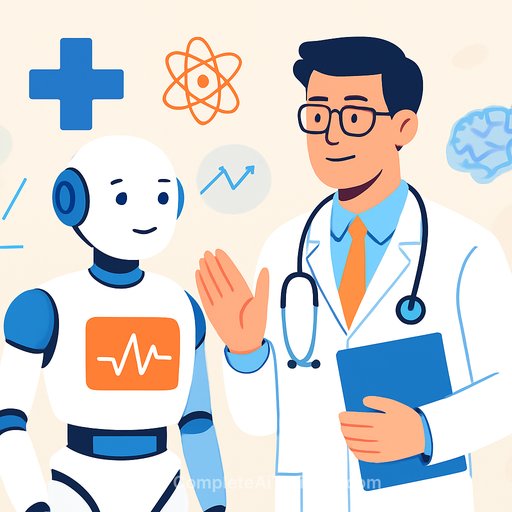
This is the point: AI won't replace clinicians. It extends clinical judgment. The work is learning when to trust it, how to use it, and how to explain it to patients and teams.
What AI is doing in care today
Across hospitals and clinics, AI is reading images, flagging lab patterns, and surfacing risk scores in real time. Think of it as pattern recognition at scale, embedded where work happens.
In emergency care, TREWS is deployed across Johns Hopkins hospitals. It analyzes incoming vitals and labs inside the EHR and triggers alerts when a sepsis threshold is crossed. The value is speed: earlier recognition, earlier therapy.
In primary care, Find HF (from researchers at the University of Leeds) scans vitals, labs, and prior ECGs to flag early heart failure. Targeted testing confirms dysfunction months sooner than usual. Moving diagnosis forward by up to two years means earlier treatment and fewer admissions.
In hematology, standard CBCs can hide weak signals. Machine learning models (including XGBoost and logistic regression) spot subtle patterns-borderline anemia plus platelet changes-and prompt earlier workup for conditions like CLL. That nudge can pull diagnosis forward and change a patient's trajectory.
What's under the hood (and what isn't)
AI here isn't "thinking." It's pattern detection. It surfaces features in imaging, extracts risk signals from notes via NLP, forecasts deterioration based on trends, and triages symptoms with structured prompts and bots.
Before you act on an AI recommendation, ask three questions
- Who built and validated it? Was the team diverse (clinicians + engineers)? Is there peer-reviewed evidence or external validation? Avoid black boxes with unclear provenance.
- Will it work here? Validate locally. Check calibration on your population, care setting, formulary, and workflow. One size fits no one.
- How will we monitor it? Set up oversight to catch false alarms, drift, and bias. Define owners, thresholds for intervention, and a feedback loop clinicians can trust.
For regulatory context and postmarket expectations, see the FDA's guidance on AI/ML-enabled medical devices: AI/ML in Medical Devices.
Collaboration is the differentiator
Successful tools are built with clinicians, not just for them. Engineers bring scale. Clinicians bring context, edge cases, and the reality of a 12-minute visit. Put both in the same room from day one, or you'll ship a model that looks great on paper and stalls on the floor.
Educating the next generation
Programs that blend engineering and medicine are emerging across universities. The goal is simple: produce clinicians who can question models and engineers who understand care pathways. If you're upskilling your team, structured learning helps. Explore role-based options here: AI courses by job.
How to explain AI to patients
Keep it clear and human: "I use a tool that spots patterns in your health data-like a second set of eyes. It doesn't replace my judgment. It helps reduce misses. Your data is protected like the rest of your record, and we'll decide the next steps together."
What's coming next
- AI inside the EHR. Note summaries, risk flags, suggested next steps-no extra logins, less click-chasing.
- Continuous signals from home. Wearables and devices streaming early-warning signs for heart failure, glycemic trends, and respiratory changes.
- Stronger oversight. Postmarket performance monitoring, transparency demands, and bias audits. Institutions will ask tougher questions-and clinicians should lead that conversation.
Your next move
- Join an advisory group or pilot. Request pre-implementation evidence and a monitoring plan.
- Validate locally. Track PPV/NPV, calibration, alert burden, and outcome impact by population segment.
- Define ownership. Who tunes thresholds, reviews drift, and sunsets poor performers?
- Plan communication. Build patient scripts and clinician FAQs to reduce confusion and alert fatigue.
Three takeaways
- AI is a tool. Clinical judgment stays central.
- Know the limits. Validate locally and monitor for drift and bias.
- Communicate clearly. Patients trust clinicians, not algorithms.
If you want a concise, practical starting point for team training, browse updated options here: Complete AI Training.
Your membership also unlocks: