
AI news ·
Directors Guild of Nigeria urges ethical AI use to protect African storytelling
Nigeria's Directors' Guild warned at a three-day summit that unregulated AI threatens Africa's culture. Members urged governments to establish ethical frameworks for filmmakers.
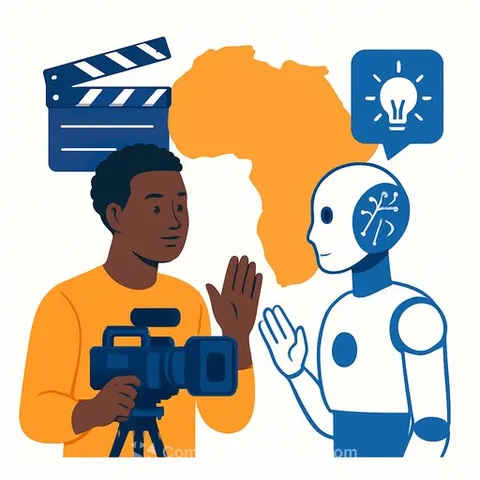
The Directors' Guild of Nigeria concluded its three-day international conference at Coal City University, Enugu, on July 4, 2026, with a warning that irresponsible use of artificial intelligence could erode Africa's cultural heritage and centuries-old storytelling traditions. The gathering drew filmmakers, scholars, media practitioners, tech experts, and students from across Nigeria and beyond to confront a central question: how African narratives survive and thrive in an AI-driven creative economy.
Themed "Artificial Intelligence, Technology and the Future of Storytelling in Africa," the conference produced a communique that rejected both uncritical embrace and outright rejection of the technology. Participants agreed that the future of African storytelling depends on a deliberate balance between human creativity and emerging tools.
AI as a tool, not a replacement
The communique framed AI as a complement to human ingenuity rather than a substitute for it. "AI should not be demonized," the document read. "It is a technological advancement capable of enhancing creativity, improving productivity, expanding access to knowledge, and unlocking new opportunities for African filmmakers, scholars, artists and media professionals. However, cultural experience, emotional intelligence and artistic judgment remain indispensable to authentic African storytelling."
That distinction - between enhancement and replacement - ran through every resolution. The guild urged Nigeria's creative industries to see AI as a catalyst for innovation and global competitiveness, not a threat to jobs. But it tied that optimism to concrete investment in reskilling, continuous professional development, and the creation of new roles that AI makes possible. For creatives working across film, media, and narrative arts, AI for Creatives is becoming less of an elective and more of a professional necessity.
Governance and ethical frameworks
The conference did not stop at encouragement. It called on federal, state, and local governments - alongside academic institutions and professional bodies - to invest in digital infrastructure and establish clear ethical frameworks for AI deployment in Nigeria's creative sector. Without those guardrails, participants warned, the technology could distort or flatten the very stories it promises to amplify.
For writers and storytellers specifically, the stakes are immediate. AI tools can generate dialogue, structure plots, and mimic voice, but the conference drew a firm line: authentic African storytelling requires emotional intelligence and lived cultural experience that no model can replicate. Writers looking to integrate these tools without losing their voice can find structured guidance through resources like AI for Writers.
Why this matters for creatives
The DGN's position gives working creatives a framework for decision-making: adopt AI where it sharpens your work, resist it where it dilutes cultural specificity, and push for the training and infrastructure that make responsible use possible. The conference made clear that the technology is arriving faster than policy, and the gap between the two is where careers - and entire storytelling traditions - will be won or lost.