Disney's $1B stake in OpenAI: a clear signal for enterprise strategy
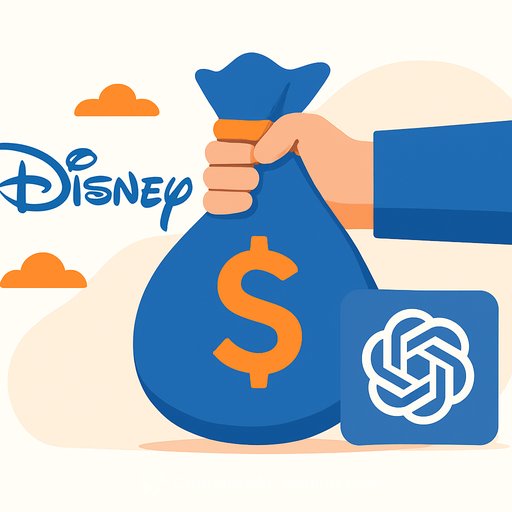
Disney put $1 billion into OpenAI and made the case on CNBC's Squawk on the Street. Bob Iger was direct: the move is about building advanced AI into Disney's core business. His line summed it up: "We've been mindful of the significant growth in AI… extremely impressed with the progress that Sam and OpenAI have made… This is a good investment for the company."
Sam Altman echoed the vision: AI can expand creative range and deepen consumer engagement. The takeaway for executives: this is a capability build, not a side bet.
Why this deal matters
Disney pairs capital with access, governance, and IP protection. The agreement is "partially exclusive," which hints at preferred rights without giving up flexibility. That's a practical way to secure priority features while avoiding full vendor lock-in.
Context matters. Disney has a long record of protecting IP, including sending cease and desist letters to tech platforms like Google. The structure of this deal reflects that stance: use AI to extend the brand, and keep the crown jewels safe.
Where value shows up first
- Content development: faster ideation, script support, and research for writers and producers.
- Animation and VFX: tooling that reduces cycle time and cost while keeping final creative control human.
- Personalization: smarter recommendations and adaptive experiences that lift LTV and retention.
- Marketing and commerce: audience segmentation, asset generation, and media mix testing at scale.
- Operations: forecasting, scheduling, and demand planning across studios, streaming, parks, and products.
- Safety and rights management: AI-assisted detection of leaks, fakes, and unauthorized use of characters.
The strategic logic behind "partial exclusivity"
- Preferential access to certain models, features, or content-safety systems relevant to Disney's needs.
- Co-development channels that turn Disney's requirements into product roadmaps faster.
- Clear lanes on IP usage, training data boundaries, and content filtering tuned to brand standards.
- Option value: priority without being fully tied to a single stack.
Operating model: how to make a $1B AI deal pay off
- Ownership: stand up an AI product office reporting to the COO/CPO with dotted lines to legal and security.
- Data contracts: define what first-party data can be used, where it's stored, and how outputs are logged and audited.
- Model access: secure dedicated instances or privacy layers; segment workloads by risk class.
- Guardrails: content standards, watermarking, usage rights, and human-in-the-loop review for sensitive outputs.
- Tooling: embed AI into existing creative and engineering tools; avoid parallel workflows that stall adoption.
- Finance: link projects to unit economics-time saved, hit rate lift, CAC reduction, retention gains.
- Workforce: update roles, incentives, and training; commit to clarity on how jobs change, not vague promises.
KPIs executives should track
- Production: cycle time per asset, revisions per asset, cost per finished minute.
- Growth: ARPU, churn, session length, conversion to paid, merch attach rate.
- Quality: brand-safety incidents, IP enforcement wins, factual error rate in AI outputs.
- Adoption: % of teams using approved AI tools weekly, model call volumes by use case, satisfaction scores.
Risk map and practical mitigations
- IP leakage: strict data segregation, redaction, and no training on proprietary assets without explicit approval.
- Safety and bias: policy tuning, evaluation suites, and red-team tests before launch.
- Vendor dependence: multi-model routing for nonexclusive use cases; exit clauses and escrow for critical systems.
- Regulatory: content provenance, age gates, audit trails; align with emerging AI and privacy rules across markets.
- Labor relations: clear change management, new career paths, and productivity sharing where appropriate.
A 12-month execution plan
- 0-90 days: pick 5-7 high-ROI use cases, set data and compliance guardrails, launch a protected sandbox.
- 3-6 months: ship production pilots in content, marketing, and ops; integrate into core tools; start monthly KPI reviews.
- 6-12 months: scale winners across business units, retire shadow tools, negotiate next-phase model access and pricing.
What to watch next
- Model features OpenAI prioritizes for media and safety-signals on how the partnership is evolving. See OpenAI for updates.
- Competitor responses from studios, streamers, and theme park operators-expect more semi-exclusive deals.
- Regulatory momentum on content provenance and synthetic media disclosures.
Board-level questions worth asking
- Which core assets and data are off-limits, and who decides exceptions?
- Where will AI move a KPI by 10-20% in 12 months, not 2-3%?
- What's our multi-vendor plan if exclusivity narrows or pricing shifts?
- How are we auditing outputs for safety, bias, and contractual rights-monthly and independently?
- What training and role redesigns are funded this year to lock in adoption?
If your leadership team needs a structured upskilling track to execute a program like this, explore executive-focused options at Complete AI Training.
Your membership also unlocks: