AI Companies Face Copyright Reckoning as Courts Reject "Move Fast and Break Things" Defense
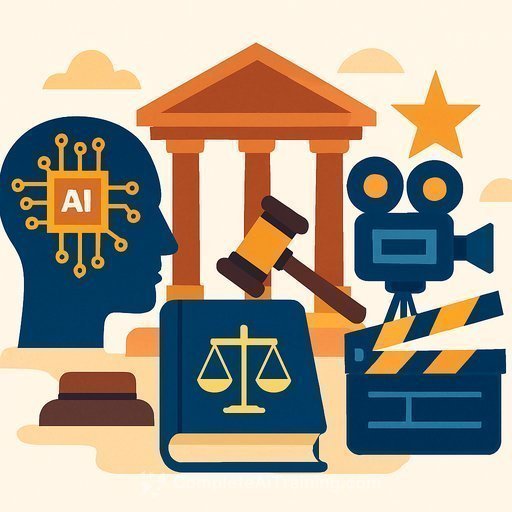
Nearly 100 lawsuits now allege that AI companies unlawfully copied protected works without authorization. The legal strategy is working: companies that ignored copyright law are being forced to the bargaining table.
The shift marks a turning point. Early claims that large language models operate as neutral tools independent of training data no longer hold up. When Midjourney generates pixel-perfect renderings of Disney's Buzz Lightyear, Darth Vader, and Elsa on demand, the source material becomes impossible to ignore.
The Anthropic Settlement: $1.5 Billion Wake-Up Call
Anthropic downloaded over seven million pirated books to train its language model, according to a federal court ruling. The company paid nothing for the works.
U.S. District Judge William Alsup determined that downloading from piracy sites is "inherently, irredeemably infringing"-regardless of whether the company later used the material fairly. The distinction mattered legally: Anthropic's liability began the moment it acquired the copies, not when it deployed them.
Class certification created the real pressure. Instead of defending against scattered lawsuits, Anthropic faced exposure to hundreds of billions in potential damages across millions of works. The company settled within weeks, agreeing to pay $1.5 billion to affected authors.
The settlement proved that litigation works as a negotiating tool. Anthropic didn't shut down. The company raised $380 billion in its latest funding round. But it finally did what it should have done from the start: negotiated permission to use copyrighted material.
Disney's Licensing Strategy Works
Disney pursued two parallel paths: litigation against Midjourney for unauthorized use of its characters, and a licensing deal with OpenAI.
The contrast is instructive. Midjourney built its platform on Disney's creative works without permission, generating revenue while bypassing licensing structures. OpenAI negotiated a deal allowing it to use Disney characters in its Sora video platform. Disney took an equity stake in the AI company and gained access to OpenAI's tools.
OpenAI later shut down Sora, negating the Disney deal. But the agreement still demonstrates that licensing is practical, not an innovation killer. Companies can access high-quality creative material legally while creators maintain control over their work.
Why Copyright Enforcement Enables Innovation
Copyright owners aren't trying to block AI development. They're enforcing the principle that creators deserve compensation for their work.
Disney generates revenue from copyrighted works. That revenue funds experimentation, new tools, and fresh storytelling. Pixar pioneered computer animation decades ago. Disney continues developing cutting-edge visual effects and production tools. These innovations exist because the company earned money from its creative output.
Building a business model on others' creative works without compensation shifts costs onto creators while allowing AI companies to capture the value. Over time, this weakens the industries that supply the content AI systems depend on.
Arts and entertainment fund themselves through licensing and sales. When those revenue streams disappear, incentives to create erode. Everyone loses-including AI companies that rely on rich, diverse training data.
The Path Forward
The legal pressure is working. AI companies now understand that licensing was always the intended destination, not an obstacle to innovation.
Anthropic's settlement shows the formula: litigation establishes accountability, licensing enables progress. Companies that seek permission get partners. Companies that scrape without asking get lawsuits and billion-dollar settlements.
For development teams building AI systems, the implication is clear. Understanding AI copyright law and licensing requirements isn't a compliance checkbox-it's fundamental to sustainable product development. The cost of ignoring it has become too high.
Your membership also unlocks: