DOE Demonstrates AI Tool That Cuts Nuclear License Applications From Weeks to Days
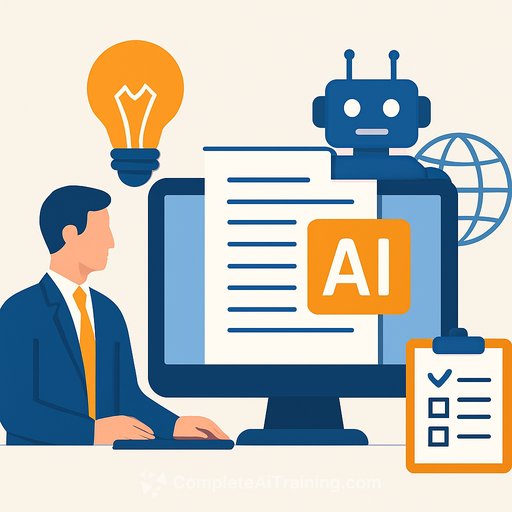
The Department of Energy completed a proof-of-concept test showing that an AI tool can generate a 208-page chapter of an NRC license application in one day-work that typically requires four to six weeks from a team of experts.
The tool, called Gordian, was built by Everstar and tested on a document for the National Reactor Innovation Center's Generic High Temperature Gas Reactor at Idaho National Laboratory. A subject-matter expert who reviewed the output described it as consistent with what regulators would expect from a preliminary draft.
How the AI Works
Gordian uses retrieval-augmented generation, which anchors AI responses to source documents rather than generating text from scratch. This design reduces hallucinations-false or fabricated information-by forcing the tool to cite its sources and maintain compliance with NRC requirements.
The AI had access to existing safety analysis documents created by subject-matter experts, NRC databases, and federal regulations. DOE experts also wrote "skill modules"-structured instructions that control how the AI behaves at each step, enforce citation discipline, and include quality checks.
Because the input documents were preliminary and incomplete, the AI output reflected those limitations. The tool did identify missing, inconsistent, or derived information across documents-issues that might otherwise slip through multiple human review cycles.
What Needs Work
The tool struggled to consistently distinguish between a parameter's safety limits and its operational ranges, a distinction that matters both technically and regulatorily in nuclear licensing.
DOE plans to develop a dedicated review tool to document and resolve discrepancies. The agency is also pursuing a formal working group with the NRC on AI-assisted licensing.
The Broader Plan
The DOE intends to shift expert labor from initial drafting to refinement and review. This proof-of-concept emerged from the Genesis Mission, a national initiative launched in November 2025 to accelerate AI use in scientific research.
The next phase will test the tool with actual documented safety analysis documents from willing nuclear facilities in a secure environment, moving closer to production-grade regulatory use.
Longer term, the same modular approach could be applied to other chapters of safety analysis reports, preliminary safety documents, nuclear quality assurance compliance files, and fuel fabrication facility licensing.
The project involved the DOE, Everstar, Idaho and Argonne National Laboratories, and Microsoft.
Your membership also unlocks: