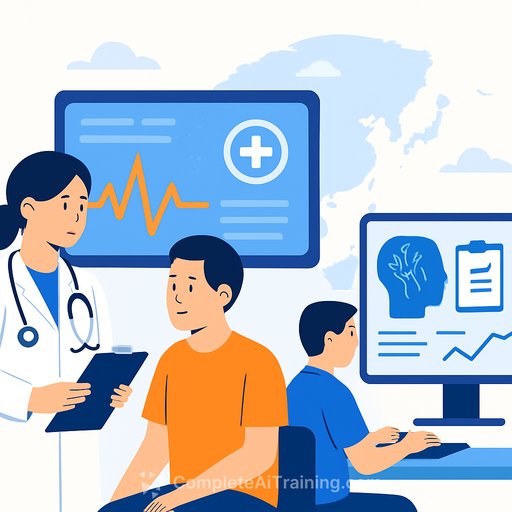
AI tools improve diagnostics and patient outcome prediction in resource-limited healthcare settings
AI is moving from slide decks to wards. In clinics with tight budgets and thin staffing, it's helping clinicians read images faster, spot high-risk patients earlier, and use scarce resources where they matter most. The focus is simple: better decisions at the point of care, using data you already collect. For practical deployment examples and considerations, see resources on AI for Healthcare.
Where AI delivers value right now
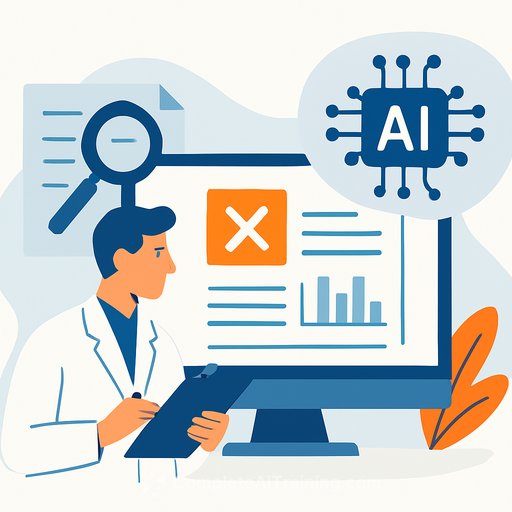
- Imaging support: Algorithms flag likely pneumonia on chest X-rays, prioritize critical findings on CT, and guide novice users during low-cost ultrasound. Smartphone capture plus cloud or on-device models shortens time to a workable answer.
- Pathology and microscopy: Slide analysis tools pre-screen for abnormalities, count cells, and highlight regions of concern, speeding up review for overextended specialists.
- Risk prediction from routine data: Models trained on vitals, labs, and demographics estimate sepsis risk, deterioration, or readmission to trigger earlier interventions and smarter triage.
- Decision support in the workflow: Simple mobile or EHR-integrated prompts nudge next steps-order a confirmatory test, start antibiotics, escalate care, or safely defer.
Why this is feasible in low-resource settings
- Smartphone-first delivery: Camera, compute, and connectivity in one device most staff already carry.
- Cloud and edge options: Cloud for heavy lifting where bandwidth allows; compact on-device models for offline or low-bandwidth sites.
- Lightweight hardware: Battery-powered ultrasound, portable X-ray, and simple adapters keep upfront costs down.
- Simple interfaces: Clear prompts, color-coded risk, and few taps reduce training burden and error.
Operational wins you can measure
- Shorter time to diagnosis and treatment initiation.
- Reduced burden on radiology and pathology backlogs.
- Earlier escalation for deteriorating patients; safer de-escalation for low-risk cases.
- More consistent quality across shifts, sites, and experience levels.
Limits and risks to watch
- Data bias and generalizability: A model trained elsewhere may miss local disease patterns. Validate locally before scaling.
- Privacy and security: Protect patient data in transit and at rest; establish clear consent and data use rules.
- Regulation and liability: Clarify approvals, clinical oversight, and who is accountable for decisions.
- Infrastructure constraints: Plan for patchy power, intermittent internet, and device maintenance.
- Failure modes: False reassurance and alert fatigue can both harm. Keep clinicians in the loop.
Implementation playbook (field-tested steps)
- Define the clinical bottleneck: Example: triage suspected TB, sepsis alerts in general wards, or obstetric ultrasound guidance.
- Pick one high-yield use case: Clear outcome, clear endpoint, and a workflow that staff already follow.
- Audit your data: What vitals, labs, and images are reliably captured? What's the missingness pattern? Also review your data pipelines and preprocessing steps-see guidance on AI Data Analysis.
- Start with a guarded pilot: Run shadow mode or decision support mode; do not fully automate.
- Validate on local cases: Report sensitivity, specificity, PPV/NPV, and calibration; stratify by age, sex, and site.
- Integrate with the workflow: One screen, clear next actions, minimal data entry. If it adds clicks, it will be bypassed.
- Train the team: Short sessions, quick reference guides, and a help channel for fast issue resolution.
- Monitor and iterate: Track alerts, overrides, outcomes, and equity gaps. Retrain or recalibrate on local data.
- Governance and safety: Set escalation rules, audit trails, and periodic model review.
- Cost and sustainability: Budget for devices, data, support, and model updates-not just the pilot.
Metrics that matter
- Diagnostic: Sensitivity/specificity, AUC, calibration (Brier score), time to report.
- Clinical: Time to antibiotics or surgery, length of stay, ICU transfers, mortality.
- Operational: Triage accuracy, backlog clearance time, clinician time saved per case.
- Stewardship: Appropriate imaging/tests ordered, antibiotic use patterns.
- Equity: Performance across sites and patient subgroups; access for rural clinics.
Data and model practices that avoid surprises
- Collect a representative local dataset and document the data pipeline end-to-end.
- Use clear versioning for models and thresholds; keep a rollback path.
- Calibrate predictions to local prevalence; recalibrate after protocol changes.
- Plan for model drift monitoring and periodic revalidation.
Policy and partnerships
- Co-develop with frontline clinicians, health ministries, and patient groups from day one.
- Align with guidance such as the WHO ethics and governance of AI for health.
- Use reporting standards like CONSORT-AI/SPIRIT-AI for trials and protocols (BMJ guidance).
- Structure agreements for data sharing, procurement, and ongoing support before scale-up.
Skills and capacity building
Most teams need light but focused training: interpreting risk scores, spotting failure modes, and documenting overrides. Build a champion network-nurses, junior doctors, and one IT lead per site-who can coach peers and escalate issues quickly.
If you're setting up a training track for clinicians or clinical data teams, you can explore practical course lists by role here: AI courses by job. Keep it short, hands-on, and tied to your actual workflows.
Bottom line
AI can lift diagnostic accuracy and outcome prediction where resources are tight-if it's validated locally, embedded cleanly, and governed well. Start small, measure hard outcomes, and keep clinicians in control. The gains come from fewer delays, fewer misses, and better use of what you already have.
Your membership also unlocks: