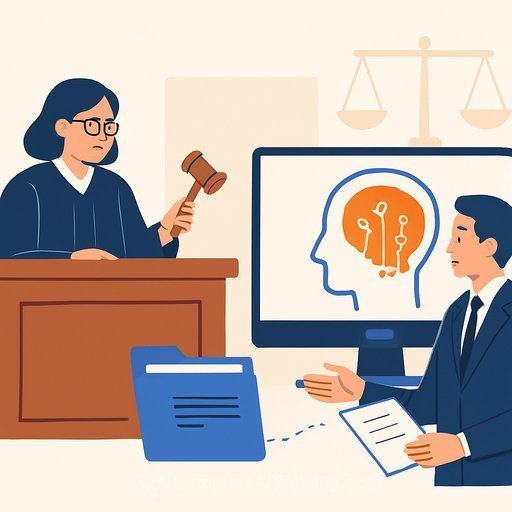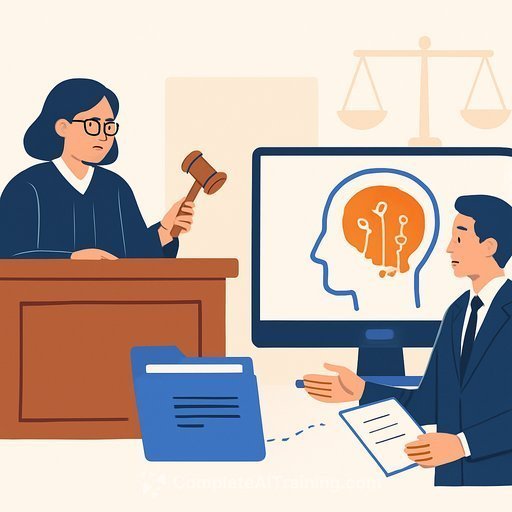
Don't Paste the Attorney's Letter Into ChatGPT: What HOA Boards and Managers Need to Know About AI and Legal Privilege
A federal court just made it clear: conversations with public AI chatbots are not protected by attorney-client privilege. For HOA Boards and community managers, that has a simple, high-stakes takeaway. If you paste your attorney's advice into ChatGPT, Claude, or similar tools, you may waive privilege - instantly and permanently.
This isn't theoretical. It's already showing up in investigations and disputes. Treat AI prompts like emails to a third party you don't control.
What the Court Actually Said
The case turned on three points with broad application:
- The AI is not your attorney. Privilege protects communications with a lawyer, not a chatbot.
- The conversation wasn't confidential. The platform's terms let the provider access or share inputs, killing any reasonable expectation of privacy.
- It wasn't directed by counsel. Work product generally covers materials prepared by or at a lawyer's direction. Solo AI use didn't qualify.
The court also addressed pasting privileged content into a public AI tool. That disclosure to a third party waives privilege as you type. See Federal Rule of Evidence 502 on waiver.
Why HOA Boards and Managers Are Especially Exposed
Associations run on legal guidance - assessments, enforcement, contracts, and covenants. Managers and Board members are under pressure to translate that guidance for homeowners and committees.
That's why the risky shortcuts pop up. Common scenarios include:
- Pasting a legal opinion on enforcing a deed restriction into a chatbot to draft a homeowner letter.
- Uploading counsel's assessment strategy memo to build a summary for the Finance Committee.
- Running a contractor dispute analysis through AI to create Board talking points.
- Feeding confidential litigation advice into an AI tool to generate a community FAQ.
In each case, once privileged content hits the platform, you may have handed it to future opposing counsel.
The Risk Isn't Limited to Free Tools
A paid plan doesn't automatically protect you. Many "pro" or enterprise tiers still reserve rights to access, process, or share inputs under their terms.
Until your attorney reviews the specific data handling terms and confirms a path that preserves confidentiality, assume disclosure risk applies.
Discovery Is Coming for AI Conversations
Expect direct questions: "Did you use any AI tools to prepare for this meeting or analyze documents in this matter?" Also expect subpoenas for prompts, inputs, and outputs tied to the dispute.
Once courts treat public AI conversations as non-privileged, they become fair game in discovery.
Three Things Community Associations Should Do Now
- Adopt a written rule on legal content and AI. No one - Board members, committee chairs, managers, or staff - may paste attorney communications, legal opinions, settlement discussions, or litigation materials into any AI tool not specifically approved by counsel. State the rule and the consequences of violating it.
- Route AI use through your attorney when legal content is involved. Privilege may hold when counsel designs the workflow, selects the tool, and controls inputs/outputs. If you want AI-assisted summaries for homeowners, do it with your lawyer directing the process - not around it.
- Train the people who touch legal documents. Build a simple checkpoint into onboarding and annual training: "Did this come from our attorney or contain confidential information?" If yes, stop and call legal before using any AI.
For practical guidance on safe AI use in legal workflows, see AI for Legal.
Bottom Line
Privilege requires a real attorney, confidentiality, and a reasonable expectation of privacy. Public AI tools miss all three.
HOA Boards and managers face daily exposure on enforcement, assessments, contracts, and fair housing. Don't exchange short-term convenience for long-term risk. When in doubt, call your attorney before you paste.
Your membership also unlocks: