Writers push back on AI "theft" - and a workable licensing path emerges
Two moves at the London Book Fair summed up where we are: a loud protest against unlicensed AI training, and a practical framework that could pay for it. Both matter if you make a living from words.
Why writers are protesting
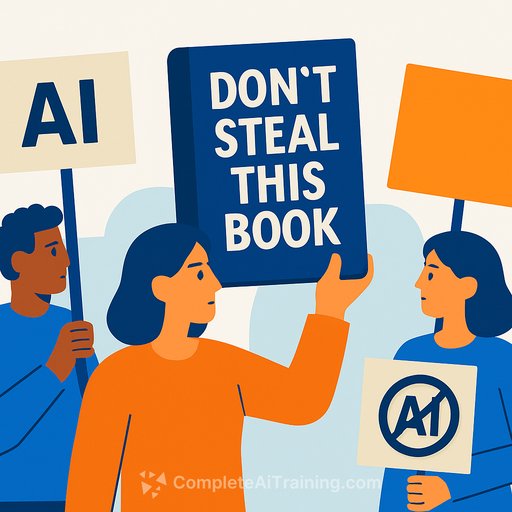
"Don't Steal This Book" - an empty book carrying signatures from around 10,000 writers, including Kazuo Ishiguro, Philippa Gregory, and Richard Osman - is being distributed at the Fair. The aim: keep pressure on government and AI companies to stop training models on copyrighted work without permission or payment.
Organizer and composer Ed Newton-Rex put it bluntly: "Generative AI competes with the people whose work it is trained on, robbing them of their livelihoods." That line lands because it's true for many of us: unpaid training creates a market that undercuts the original creators.
Policy heat: "clear and present danger," reforms paused
A House of Lords committee warned that generative AI poses a "clear and present danger" to the UK's creative industries. The government says it wants copyright rules that "value and protect human creativity" while supporting innovation - and, according to reports, planned reforms due on 18 March are now likely on hold after backlash from writers, artists, and musicians.
If you want the current legal baseline, the UK already has a narrow exception for non-commercial text and data mining; proposed expansion to commercial research triggered the pushback. See the UK IPO overview of copyright exceptions for context: UK IPO: Exceptions to copyright.
A way forward: PLS collective licensing for AI training
Publishers' Licensing Services (PLS), working with the Copyright Licensing Agency and the Authors' Licensing and Collecting Society, has proposed an opt-in collective licensing scheme for AI training and related uses of text. In short: publishers can grant permission for defined AI uses, and AI developers pay to access content under agreed terms.
The model extends the UK's voluntary collective licensing approach. It would include a licence plus an online content store for lawful access, and it does not replace existing direct deals between individual publishers and AI companies.
PLS chief executive Tom West said: "The pace of change is rapid, and publishers must remain active participants in shaping how their content is used. This first stage is about engagement and collaboration. By opting in, publishers will be part of collective approach that aims to ensure content use in AI models is lawful and fairly remunerated."
What this means for writers
If your publisher opts in, payments would flow via publisher channels and collecting societies, subject to your contract. That makes your contract terms - rights granted, revenue shares, and approvals for new uses - mission-critical.
Independent authors should watch for direct participation routes and clear tools for consent, audit, and payment. The bigger point: permission first, payment attached, terms defined - not scraping by default.
Practical next steps for writers
- Ask your publisher if they plan to opt into the PLS AI scheme. Press for clarity on audit trails, reporting, and how author shares will be calculated and paid.
- Review your contracts: rights granted (including data/text mining), approval rights for new licensing, and revenue splits for "new media" uses.
- Confirm your ALCS registration and repertoire details are up to date to receive any relevant distributions.
- If you self-publish, monitor announcements from PLS/ALCS for direct participation. Keep records of your works, editions, and publication dates.
- Decide your stance on AI training in advance (allowed/forbidden/conditional). Communicate it to agents, publishers, and platforms you use.
- Document suspected unlicensed use. Keep links, dates, and screenshots so trade bodies or legal counsel can act if needed.
Keep your edge while protecting your rights
Push for consent and compensation, but don't ignore the tools. Learn where AI can support your workflow without giving away your catalogue for free.
Start here for practical, writer-specific guidance: AI for Writers. If you're digging into rights and compliance angles, this hub helps: AI for Legal.
The headline: writers are making noise - and a licensing path is on the table. If we want fair terms, now is the time to ask hard questions, set defaults, and get our contracts in order.
Your membership also unlocks: