British writers publish a textless book to protest AI's unpaid training
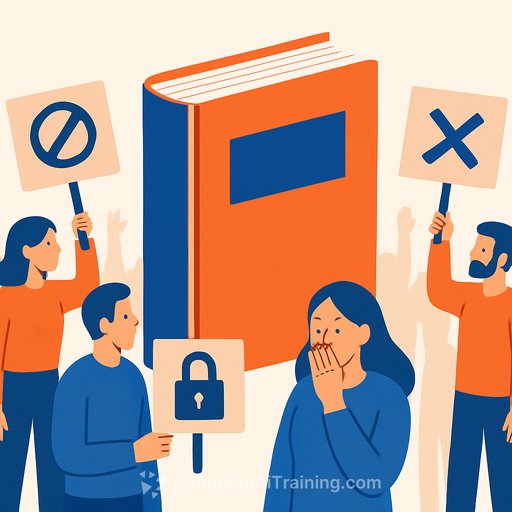
More than 10,000 UK writers have released a "textless" book titled "Don't steal this book" to protest the unlicensed use of their work by AI companies. The book contains no story-just a list of contributors-and copies are being handed out at the London Book Fair.
Participants include TV presenter and author Richard Osman, novelist Philippa Gregory, and Nobel laureate Kazuo Ishiguro. The message is clean and blunt: our work is not free training data.
Composer and copyright advocate Ed Newton-Rex, who helped initiate the project, argues the generative AI industry is built on unauthorized, unpaid labor. His call to government: protect creators and reject attempts to legalize blanket, unlicensed use of copyrighted works for AI training.
This follows a related protest in February 2025, when over a thousand musicians released a silent album-"Is This What We Want?"-made of room tone, studio silence, and light noise, highlighting how "content" without creators' consent drains value from the people who make it.
Why this matters for working writers
- AI models are trained on books, articles, and scripts you wrote-often without consent, payment, or credit.
- Those models then compete with you on commissions, bids, and briefs, pushing rates down.
- Once your work is in a training set, it's difficult to trace or compensate fairly.
- Collective action is rising-silence as protest is a signal that "content" without labor is a hollow shell.
What you can do now
- Join and support professional bodies that advocate for stronger rights and fair licensing. The Society of Authors is a good starting point: societyofauthors.org.
- Audit your catalog. Register works, track ISBNs, and keep a clean rights log (formats, territories, exclusivity, renewal dates).
- Update your contracts. Add clear clauses on AI training, dataset inclusion, derivative works, and indemnities. Insist on opt-in licensing for any machine-learning use.
- Control availability. Consider where you upload full texts; use excerpts when possible. Add "noAI"/"noimageai" metadata and block scraping where feasible.
- Offer licenses on your terms. If you're open to AI training, set conditions and pricing; if not, state it explicitly.
- Diversify income streams tied to your audience, not platforms: newsletters, direct sales, memberships, events, teaching.
- Use AI as a tool, not a replacement. Keep your voice the asset. Keep sensitive drafts offline or in private repositories.
Signals to watch
- Policy moves on text and data mining exceptions in the UK.
- Outcomes of ongoing lawsuits on unauthorized training and fair compensation.
- Publisher policies on AI clauses and dataset licensing.
- Collective actions at major events like the London Book Fair.
Further reading and support
Coverage and context: The Guardian - Books
Practical training to work with or around AI (without giving up your rights): AI for Writers
The bottom line: a book with no text and an album with no sound make a point you can feel-work is labor, not free raw material. As writers, our leverage grows when we protect our rights, set terms, and move together.
Your membership also unlocks: