When AI Starts Doing the Work: The Rise of Agentic AI in Government Contracting
Government contracting is not a writing problem. It's a workflow problem. Winning work comes from running the pursuit loop well: Research, bid/no-bid, competitive insight, teaming, compliance, drafting, pricing inputs, reviews, and constant adjustment as new signals land.
Generative AI sped up drafting. Useful, but limited. The next step is different in kind: agentic AI that can plan, act, verify, and iterate across those steps like a digital teammate. The shift isn't better paragraphs. It's work that actually moves forward.
What "Agentic Workflow" Actually Means
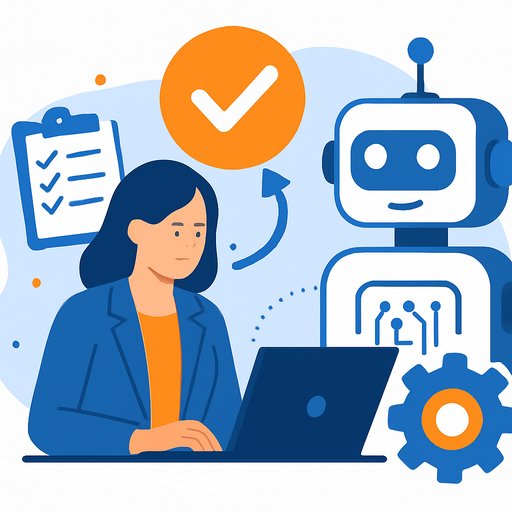
Agentic systems don't stop at one answer. They choose the next action, use tools, check their work, and keep going until the objective is complete. That mirrors how real pursuits run inside GovCon-fact-gathering, assumption testing, strategy, document creation, validation, and iteration.
In practice, this is not "one prompt to a perfect proposal." It's a continuous loop that coordinates research, analysis, strategy, and artifact generation with self-checks as the situation changes.
Two Layers: Structure at Scale, Then Autonomy
1) Data Foundation: Standardized GovCon Data at Industrial Scale
GovCon data is messy and high-volume. "Skim it live" isn't dependable. So the foundation starts with heavy ingestion and standardization-turning multimodal inputs into structured, comparable data that downstream workflows can trust.
This is industrial in scope. CLEATUS has processed over 10 billion tokens with OpenAI, on the order of tens of millions of pages-roughly comparable to the English Wikipedia-transforming public procurement inputs into structured intelligence you can query, compare over time, and assemble into work products.
2) Agentic Execution Layer: Multistep Pursuit Work, Done With You
The agentic layer is what happens after the data exists. It plans a path, takes actions with tools, checks outputs, and iterates until the task is done. That looks like real capture and proposal work: research, analyze, strategize, follow up, validate, refine.
The aim isn't to replace strong teams. It's to multiply output by compressing the time between steps and removing the manual glue work that slows pursuits down.
Tools: Generic Primitives Plus GovCon-Specific Intelligence
Execution needs tools. The platform blends general building blocks with GovCon-native capabilities.
- Generic primitives: read and retrieve, structured search (exact lookup and semantic), web verification for fresh information, and file generation for tables, spreadsheets, and documents.
- GovCon-native tools: opportunity discovery and matching (federal, state, local), contractor and competitor research, pricing insights and market data, contracting officer discovery and agency context, and agentic web research for wage determinations, market rates, and competitor signals.
This is why "agentic" is a systems Design choice: toolchains, verification, and iterative execution built on structured GovCon data.
Execution Without the ERP Straightjacket
Many GovCon systems force teams into rigid stages and fixed fields. That helps with reporting but often fights how high-performing teams actually work. Agentic workflow flips that.
The agent adapts to your operating model-your templates, reviews, naming conventions, win themes, and approval loops. It augments your playbook instead of replacing it. Teams win by leaning into their strengths, not by mirroring everyone else's process.
What Changes for Capture and Proposal Teams
The shift isn't that AI can write. The shift is that AI can execute sequences. That means tighter loops across steps that used to be separated by tool sprawl and handoffs.
- Faster signal gathering and assumption checks with built-in verification.
- Structured outputs on demand: matrices, compliance checks, outlines, pricing inputs, and draft artifacts.
- Continuous updates as amendments post or competitor signals appear.
- Less manual stitching across sources, more time on strategy and price-to-win.
Why This Matters for Government Stakeholders
Better industry execution benefits agencies too. Cleaner market research, clearer compliance mapping to the FAR, and faster, more accurate responses raise proposal quality and competition.
Agentic systems can also speed wage determination checks and price reasonableness reviews using sources like SAM.gov wage determinations, creating fewer rework cycles.
How CLEATUS Approaches It
First, build the data foundation at scale with a heavy ingestion and standardization pipeline (including work with Voltage Park's AI Factory). Then enable the agentic execution layer to plan, act, verify, and iterate across real pursuit work.
That combination-structured GovCon data plus true agentic execution-compresses timelines without forcing teams into rigid software workflows.
Practical Next Steps
- Pick one pursuit phase to pilot (e.g., opportunity research or compliance mapping) and measure cycle-time reduction.
- Standardize the inputs you touch most: past performance, resumes, pricing assumptions, and boilerplate-so the agent can assemble faster.
- Define verification rules upfront (sources, thresholds, reviewers) so the agent can self-check before handoff.
- Map your actual review loops; let the agent mirror them instead of bending your process to fit a tool.
The bottom line: Chat is helpful. Execution is decisive. Agentic AI that plans, acts, verifies, and iterates is how capture and proposal teams move faster without losing rigor.
If your team is upskilling for AI-enabled workflows, explore role-based learning options at Complete AI Training.
Your membership also unlocks: