
AI news ·
Dreamina releases Octo AI agent for collaborative video creation
CapCut's Dreamina released Octo, a free beta AI agent that scripts and generates video on a single canvas. Powered by Seedance 2.0, it replaces five apps with one workspace.
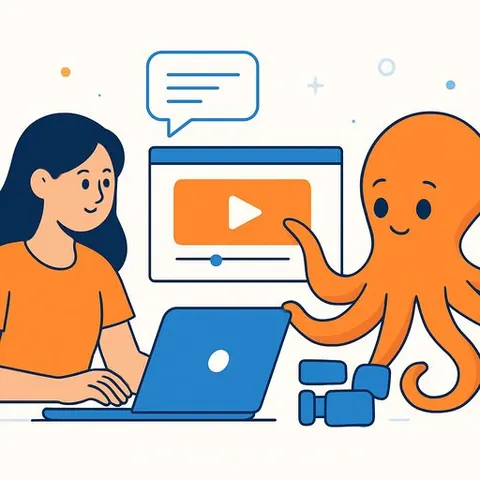
Dreamina, the AI platform from CapCut, has released Octo - a creative agent that scripts, concepts, develops characters, storyboards, generates video, and self-critiques its own output across a single infinite canvas. The tool is in beta with core features available for free, and it represents one of the clearest signals yet that AI content creation is shifting from isolated one-shot generations toward persistent, context-aware creative partners.
What Octo actually does
Octo functions as a live collaborator on a multimodal canvas where text, images, video clips, reference nodes, and conversation all exist together. You can start with a rough idea - a mood, a product direction, a handful of reference images - and the agent helps shape it into structured story elements, consistent characters, and production-ready assets.
Dreamina calls this approach Vibe Create. The agent reads the canvas and conversation history continuously, so you never need to repeat yourself. Reference nodes lock in characters, objects, environments, and styles, acting as consistency anchors across scenes. Octo can also suggest camera angles, narrative arcs, and shot lists, or generate assets automatically based on what already sits on the canvas.
The pipeline moves from text or script to image concepts, then to storyboards, and finally to video clips powered by Dreamina's Seedance 2.0 video model - all without leaving the workspace. Once clips are generated, a timeline tool handles assembly, audio syncing, and export.
The bigger shift in AI content creation
Octo arrives amid a broader rethinking of how creative AI tools should work. Early prototypes like Higgsfield's "Super Computer" agent attempted autonomous scripting, concepting, and iteration but produced mixed results - reviewers reported confusion loops, token burn, and inconsistent output. Google's Flow ecosystem agent, less ambitious in scope, has received better feedback for reliability.
These experiments point toward a future where the core creative skill is not writing elaborate prompts but communicating intent and taste to an intelligent partner that holds visual context across dozens of assets. The messy, branching collection of text prompts, generated images, storyboards, reference videos, and style references becomes the workspace itself. The question is who builds the best interface for organizing that chaos and enabling natural back-and-forth with the agent.
For professionals tracking developments in generative video, Octo's integrated approach - image generation, editing, and video creation on one canvas - offers a glimpse of where the tooling is headed. Node-based interfaces on infinite canvases currently lead as the dominant approach, though whether they remain the final form is still unclear.
Why this matters for creatives
The practical implication is straightforward: fewer tools, fewer context switches, and less time spent rebuilding mental models when moving between storyboard software, moodboard apps, character design tools, and video editors. Octo handles the intermediate steps that typically fragment a project across five different applications.
For creatives working in advertising, short-form content, or concept development, the ability to throw rough references at an agent and watch it organize them into structured, consistent output changes the speed of early-stage exploration. The agent remembers the brief. It does not get tired of iterating. And it stays grounded in the original intent across every asset it generates.
As AI tools become embedded in creative workflows, understanding which agents can actually maintain coherence across a full project - rather than just delivering a single impressive output - will separate useful tools from novelties. Octo, even in beta, makes that distinction concrete. The skills that matter most are shifting toward AI for creatives: directing, curating, and refining rather than prompting from scratch.