UK and US militaries test AI for battlefield medical decisions
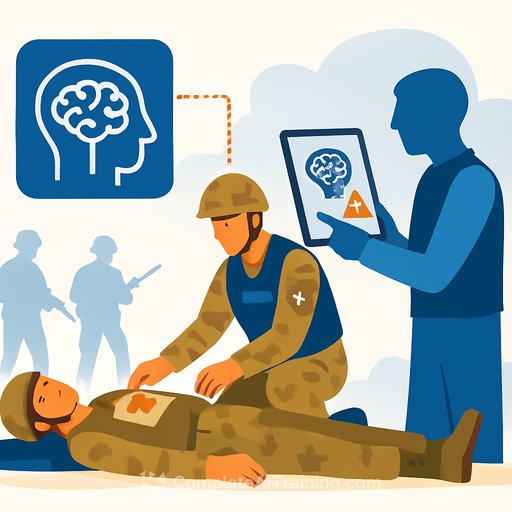
Military medics in the UK and US have trialled AI systems designed to help with life-or-death triage decisions in mass casualty scenarios. The trials, conducted in October 2025 at bases in Colchester and Oxfordshire, tested whether medics would trust AI recommendations when the system's decision-making matched their own priorities.
The research, a collaboration between the UK Defence Science and Technology Laboratory (Dstl) and the US Defense Advanced Research Projects Agency (DARPA), addresses a fundamental problem: AI systems don't naturally think like humans, so how do you build one that a medic would actually trust in an emergency?
What the trial tested
Researchers created simulated mass casualty scenarios and asked participants to make triage decisions. They then presented AI recommendations that were either aligned with the medic's own decision-making approach or deliberately misaligned.
The trial examined four specific factors that shape how medics prioritise treatment:
- Merit focus - for instance, whether to treat an injured attacker or victim first
- Quality of life considerations
- Quantity of life considerations
- Affiliation focus - whether a medic would prioritise someone from a similar military background when injuries are comparable
Participants didn't know they were evaluating AI until after the exercise ended. Researchers measured whether medics were more willing to delegate decisions to the AI when it reflected their own priorities.
Why this matters for operations
If medics gain confidence in AI recommendations, larger groups of casualties could be triaged and treated faster. An experienced medic's decision-making principles could guide less experienced practitioners, potentially saving lives in high-pressure situations.
The trials also explored a practical challenge: future battlefield conditions will generate far more information than medics can process alone. The question becomes how AI can help filter that information and support decision-making without replacing human judgment.
Next steps
Dstl will use the trial findings to inform ongoing research in human-AI teaming and decision-making. The work feeds into two research streams: Humans in Systems and People Implications of AI.
This research sits within broader government efforts to understand how AI can support - rather than substitute for - human decision-making in high-stakes environments. Learn more about AI for Government and AI for Healthcare.
Your membership also unlocks: