UK creatives win momentum in AI copyright fight: 95% reject opt-out scraping
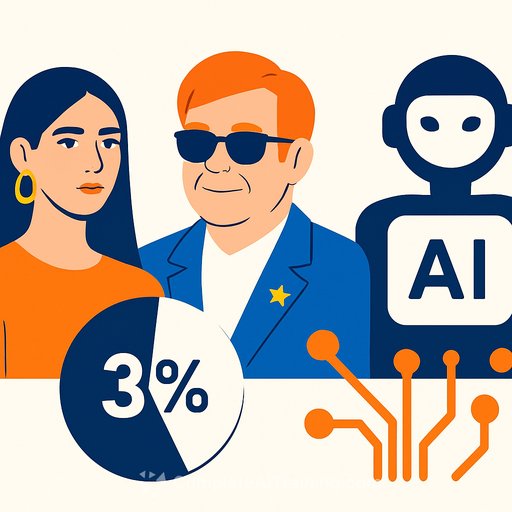
UK artists just landed a major win in the pushback against AI training on copyrighted work without permission. In a government consultation, 95% of more than 10,000 respondents backed either stronger protections and licensing or no change to current law. Only 3% supported the scrapers' dream scenario: forcing creators to actively opt out.
This surge follows high-profile support from Elton John, Dua Lipa, Sam Fender, Kate Bush, and the Pet Shop Boys. It signals a simple message: if AI companies want your work, they should pay for it.
Where the policy stands now
- The government's earlier preference for an "active opt-out" approach has been dropped after backlash.
- Liz Kendall, secretary of state for science, innovation and technology, told parliament there's "no clear consensus" and pledged proposals by 18 March 2026.
- Her stated goal: grow UK science and tech while backing creative industries that drive jobs, exports, and culture.
The culture moment is getting louder
Paul McCartney released a near-silent track as a protest against AI firms lifting creative work without consent. It's symbolic, but it worked: attention is back on consent, licensing, and fair compensation.
Push and pull from big tech and politics
Campaigners say ministers have leaned too far toward US tech interests. The US president, Donald Trump, argued that AI should be allowed to use copyrighted works without the "complexity of contract negotiations," and warned governments against rules that make it hard for AI firms to operate. That stance runs headfirst into what UK creatives are asking for: negotiated licenses, not a free-for-all.
What this means for your creative business
- Consent-first licensing is back on the table. If policy follows the consultation, your rights strengthen.
- Expect AI firms to approach catalogs for deals. Set your pricing, terms, and usage conditions now.
- Transparency will be a battleground: who trained on what, and who pays whom.
What campaigners are saying
"This is an overwhelming show of support for the commonsense position that AI companies should pay for the resources they use," said composer Ed Newton-Rex, calling for the government to rule out changes that benefit AI firms at creators' expense.
Owen Meredith, chief executive of the New Media Association, urged ministers to reject any new exception and stop the uncertainty. He said this would make clear that AI developers must license content from UK media and creative rights holders-unlocking investment and a stronger market for high-quality datasets.
Practical steps to protect your catalog now
- Inventory your IP: maintain a current list of works, formats, and rights holders.
- Set a licensing policy: define rates, model types allowed (commercial, research), regional limits, and attribution.
- Update contracts: add AI/data training clauses for clients, labels, publishers, agencies, and platforms.
- Embed metadata: assert copyright and "no training" notices in files and on portfolio pages.
- Use platform controls: apply opt-out tags/headers where available and review site robots and meta policies.
- Join your trade bodies and CMO: align with collective enforcement and stay briefed on negotiations.
- Monitor usage: track dataset disclosures from AI vendors and flag suspected misuse through formal notices.
What to watch next
- 18 March 2026: the government's deadline for policy proposals.
- Possible outcomes: licensing-by-default, stronger consent requirements, and clearer duties for AI model transparency and record-keeping.
- Market response: more AI companies seeking deals with labels, publishers, and independent creators.
Context and resources
For background on UK text and data mining rules, see the UK government's guidance on the copyright exception for TDM (non-commercial research only). It's short, clear, and sets the baseline many proposals refer to. Read the guidance.
For the broader policy direction on AI in the UK, the government's approach to regulation is outlined here: AI regulation: a pro-innovation approach.
Want to build AI skills without giving up your rights?
If you're experimenting with AI in your workflow and want guardrails, we curated practical training paths so you can create value and keep your IP protected. For data-focused practitioners, see the AI Learning Path for Data Scientists, and for research-oriented modules on training data and licensing, review our AI Research Courses.
The takeaway: the consultation shows overwhelming support for consent and licensing. Keep your house in order-assets cataloged, terms ready, contracts updated-so when AI companies come knocking, you're prepared to say yes on your terms or no with confidence.
Your membership also unlocks: