Dubai’s RTA Advances Umm Suqeim Street Improvement Project to 70% Completion
The Roads and Transport Authority (RTA) of Dubai has reached 70% completion on the Umm Suqeim Street Improvement Project. This development stretches from Al Khail Road to Sheikh Mohammed Bin Zayed Road and is part of a larger master plan covering the Umm Suqeim–Al Qudra corridor. The corridor extends 16 kilometres from Jumeirah Street to Emirates Road, serving residential and development areas with over one million residents, according to the Dubai Media Office.
Completion of an 800-Metre Tunnel Marks Significant Progress
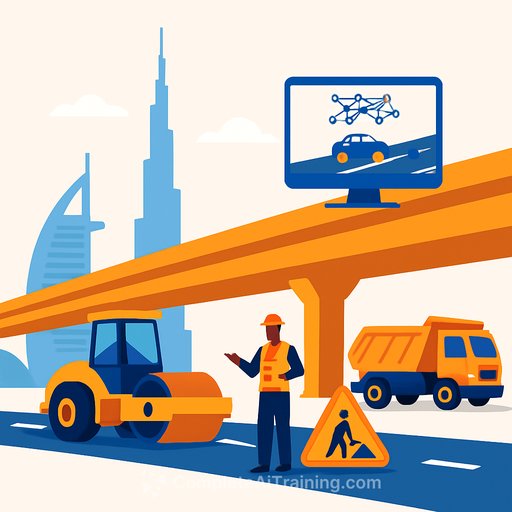
Mattar Al Tayer, Director General of RTA, shared updates during a site inspection. The current phase focuses on a 4.6-kilometre section between Al Khail Road and Sheikh Mohammed Bin Zayed Road. Key features include the construction of an 800-metre tunnel near the Umm Suqeim–Al Barsha South intersection, close to Kings’ School. This tunnel provides four lanes in each direction beneath the surface, complemented by a signalised intersection above.
The project forms a crucial east-west traffic corridor, improving integration with Dubai’s main north-south roads. It enhances connectivity between Sheikh Zayed Road, Al Khail Road, Sheikh Mohammed Bin Zayed Road, and Emirates Road. The corridor’s capacity will reach 16,000 vehicles per hour in both directions, reducing travel time between Sheikh Mohammed Bin Zayed Road and Al Khail Road by 61%, from 9.7 minutes to 3.8 minutes.
Residential and development areas benefiting from this corridor include Al Barsha South 1, 2, and 3, Dubai Hills, Arjan, and Dubai Science Park, collectively supporting more than one million residents.
AI and Smart Technologies Drive Efficiency in Project Monitoring
RTA has integrated smart technology to monitor construction progress across Dubai. Drones collect and analyse data, while artificial intelligence tracks construction milestones and performance. This approach has doubled field presence and cut site survey time by 60%. Continuous time-lapse imaging further supports a 40% improvement in project monitoring efficiency, enabling faster and more accurate decision-making.
Background: Previous Phases and Infrastructure Enhancements
- In 2013, Phase I of the Umm Suqeim Street Improvement Project was completed, covering the stretch between Sheikh Zayed Road and Al Khail Road. This included two bridges with three lanes each way, crossing eastern and western streets parallel to Al Asayel Street and First Al Khail Street respectively.
- The project introduced signalised intersections at Umm Suqeim Street’s junctions with Al Asayel Street and First Al Khail Street, alongside three pedestrian bridges to ensure safe crossing between Al Quoz and Al Barsha.
- In 2020, supporting the Dubai Hills Mall development, RTA opened a 500-metre main bridge at Umm Suqeim Street’s intersection with Dubai Hills and Al Barsha South. This bridge features four lanes in each direction and accommodates up to 16,000 vehicles per hour.
These efforts underline Dubai’s commitment to upgrading transport infrastructure to match urban growth and population demands.
For professionals interested in how AI is transforming infrastructure project management, further resources are available on Complete AI Training.
Your membership also unlocks: