
AI news ·
DUO Marketing + Communications bans AI-generated content from client work
DUO Marketing + Communications has banned AI-generated press releases and brand content, citing hallucination risks and search penalties. Google data shows 86% of AI search results favor human-written material.
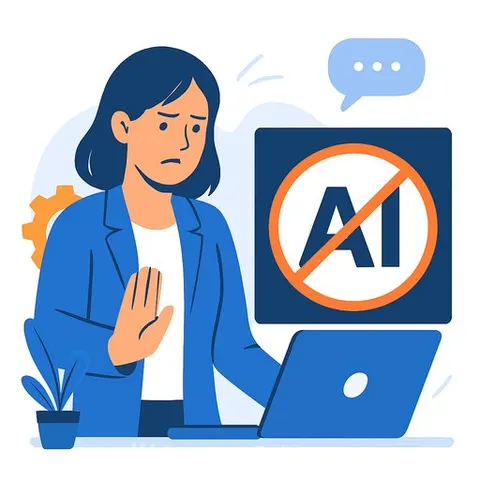
PR Firm Draws Line: No AI-Generated Content for Clients
DUO Marketing + Communications, an African technology communications agency, has adopted a hard policy against using generative AI for client content. The firm will not produce AI-generated press releases, executive opinion pieces, or brand positioning statements.
CEO Judith Middleton said the decision reflects a shift in how PR should approach artificial intelligence. Rather than asking "what role does AI play in PR," the firm is asking "what role does PR play in an AI-saturated information environment?"
"If a PR partner positions itself as a guardian of brand trust and authenticity, it is obliged to deliver human-led strategy and human-generated content," Middleton said.
Why AI Content Fails Search Rankings
Search engines penalize generic, unhelpful AI-generated material. Google's recent data shows 86% of results in its AI search feature come from human-written content. ChatGPT and Perplexity show similar patterns at 82%.
Under Google's EEAT framework-Experience, Expertise, Authoritativeness, and Trustworthiness-AI-generated content that merely rehashes existing information gets downweighted. This means brands that publish such material reduce their chances of appearing in AI-driven searches and mainstream media coverage.
The Hallucination Problem
Large language models generate false information at alarming rates. A Stanford accuracy benchmark found hallucination rates across 26 top models range from 22% to 94%. In specific scenarios, GPT-4o's accuracy dropped from 98.2% to 64.4%, while DeepSeek R1 fell from over 90% to 14.4%.
Tamsin Mackay, an IT journalist and PhD candidate researching AI and writing, explained the architectural flaw: "LLMs are predicting which word should follow the previous word. They're not researching facts."
The models optimize to satisfy the user's prompt, not to find truth. "The software will happily fabricate realistic-looking data to align with a user's bias," Mackay said. She described a classroom experiment where students reviewed an AI-generated research text containing entirely fabricated data. Only one student spotted the hallucinations.
Copyright and Legal Risk
LLMs train on data behind paywalls, creating unintentional plagiarism risks. Major publishers have filed high-profile legal cases against AI companies over this issue. Brands publishing AI-generated content face real legal exposure.
Where AI Works in PR
Middleton said PR firms should use AI deliberately, understanding where it helps and where it harms.
AI excels at:
- Deep research synthesis
- Media coverage trend and sentiment analysis
- Workflow structuring
- Identifying platforms that feed search datasets
AI harms when used for:
- Executive opinion pieces
- Press releases
- Industry columns
- Brand voice and positioning
Middleton said CMOs and CEOs should ask themselves a direct question: Can I tell which of my brand's thought leadership articles came from real human insight versus a chatbot? If the answer is no, it's time to hire communications professionals.
For PR professionals evaluating AI tools and their role in communications strategy, consider exploring AI Learning Path for Public Relations Specialists or reviewing ChatGPT's documented capabilities and limitations.