A New Era: Duolingo’s AI-First Strategy
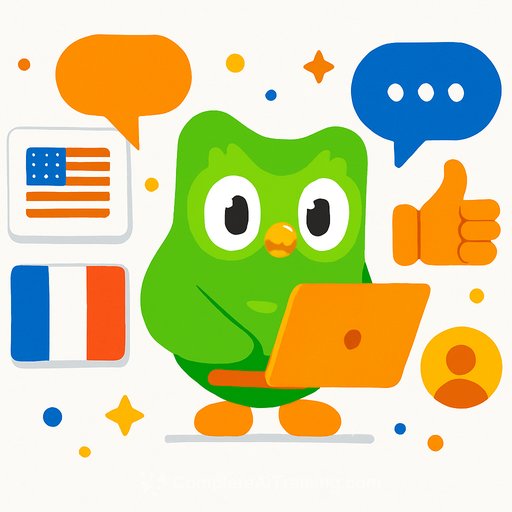
Duolingo has announced a major shift in its approach by fully embracing artificial intelligence. The language learning app recently launched 148 new language courses, more than doubling its previous catalog. Notably, Japanese courses are now available in all 28 of Duolingo's interface languages, greatly increasing access for learners worldwide.
In a company-wide email, CEO Luis von Ahn outlined this new “AI-first” strategy, placing AI at the core of product development and user experience. The pace of course creation has accelerated dramatically. Where the first 100 courses took about 12 years to develop, nearly 150 new courses were created and launched in roughly one year. This efficiency is directly linked to investments in AI technology.
For those focused on Japanese, this means the language is now accessible to speakers of Latin American languages like Spanish and Portuguese, 15 European languages, and Asian languages including Korean, Mandarin, Vietnamese, and Hindi. This expansion opens opportunities for over a billion potential learners.
Mixed Reactions
The announcement sparked lively discussions on LinkedIn and social media, with reactions split between optimism and concern. Some professionals highlight AI’s ability to scale education and customize learning experiences. One comment captured this view well: “It’s not about adding features — it’s about redefining scale, access, and customization. This shift turns AI from a buzzword into a backend for global equity in education.”
However, the most intense reactions centered on Duolingo’s employment-related statements. The CEO mentioned that the company would “gradually stop using contractors to do work that AI can handle,” and that “AI use will be part of what we look for in hiring” as well as “performance reviews.” These remarks sparked outrage among many users.
- One commenter pointed out the irony: “Mind you, this is the same Duolingo who relied on human humor to grow their social media presence. Language is the most human trait and it’s being replaced by AI?”
- Another expressed a boycott intention: “Terrible. We will support only companies that support real people, [and] not robots and AI.”
For product development teams, this move raises important questions about balancing AI-driven innovation with the human elements that make language learning effective and engaging. The rapid course expansion shows AI’s potential to accelerate product offerings, but it also highlights a growing tension around workforce changes.
If you are exploring how AI can reshape product development in education or other sectors, consider reviewing AI training resources that offer practical insights on integrating AI ethically and effectively. For example, Complete AI Training provides courses that help teams adapt and thrive in AI-first environments.
Your membership also unlocks: