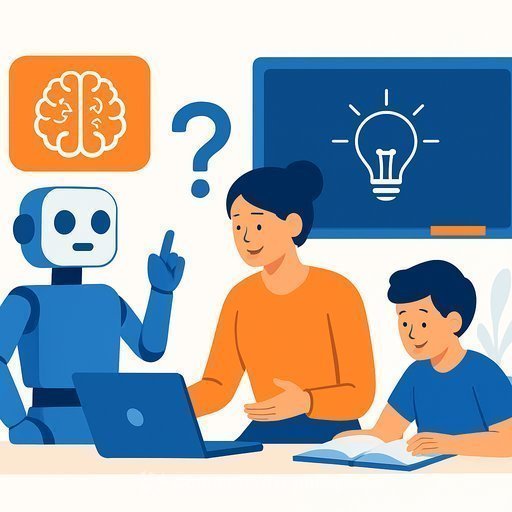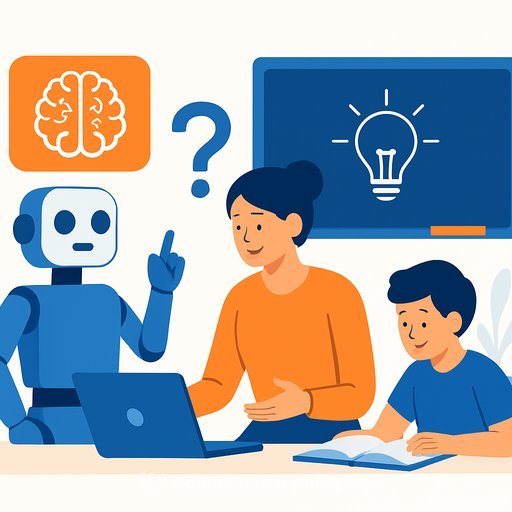
East Penn School District directors broach AI use in classrooms
The East Penn School District board held a focused discussion on how artificial intelligence will be used across the district. Superintendent of Schools Dr. Kristin Campbell reminded directors that board policy 815.1, passed last September, sets expectations for generative AI in teaching and learning. She noted the technology department and instructional coaches have spent the past year building support for teachers and students.
Director of Technology Michael Billman and K-12 Technology Coach Dylan Peters presented a district plan to guide classroom use. As context, the World Economic Forum notes that by 2025, "Generative AI is expected to disrupt nearly every industry in how we acquire knowledge." Source.
What policy 815.1 likely means in practice
- Clear guidance on acceptable use for staff and students (transparency, citation, originality, and academic integrity).
- Privacy and data protections, including rules for student accounts and parent communication.
- Teacher discretion with guardrails, plus support from technology and curriculum teams.
- Ongoing review as tools and state guidance change.
Where schools see quick classroom wins
- Lesson planning: draft objectives, scaffolds, and differentiation ideas faster, then refine.
- Feedback: create rubric-aligned comments and exemplars while keeping teacher voice front and center.
- Accessibility: produce summaries, read-aloud scripts, and language supports for diverse learners.
- Student practice: structured prompts for brainstorming, revision, and study guides (with citation expectations).
Implementation moves districts can act on now
- Clarify use cases: what is encouraged, restricted, and prohibited for staff and students.
- Adopt grade-appropriate AI disclosure norms (e.g., "What I used AI for and how I verified it").
- Pilot in a few courses with clear success criteria and artifacts of learning.
- Stand up a cross-functional review team (tech, curriculum, legal, special education, building leaders, teacher reps, and students).
- Create a fast feedback loop: collect teacher/student input monthly and adjust.
Risk management and equity
- Privacy: prefer tools with institutional accounts, admin controls, and clear data retention policies.
- Bias and accuracy: require verification strategies and multiple sources for factual work.
- Assessment integrity: redesign high-value tasks to emphasize process, reflection, and oral defenses.
- Access: ensure students without home devices or internet have equitable pathways to learn and complete work.
Professional learning that actually sticks
- Short, job-embedded workshops by grade band and subject-show one method, try it, share results next week.
- Prompt libraries tied to standards and local curricula, not generic tips.
- Model "human-in-the-loop" routines: plan → draft with AI → verify → adapt for students.
- Showcase teacher-created exemplars with time-saved estimates and student outcomes.
Tool selection checklist
- Meets district privacy and security requirements (including student data protections).
- Admin controls for auditing, access, and content filters.
- Works with your SIS/LMS and device fleet; low friction for classrooms.
- Clear total cost of ownership and support model.
- Evidence from pilots in similar grade levels and subjects.
What to watch in 2025
- State-level guidance on student data and AI-assisted instruction.
- Vendor contract changes around training data and content retention.
- Detection tools: reliability remains inconsistent-design assessments that do not rely on detectors.
- New features in office suites and LMS platforms that bring AI into daily workflows.
For educators building skills
If you're planning structured training for staff, curated course lists by role can speed things up. Explore options here:
Bottom line: East Penn's discussion shows AI is moving from theory to day-to-day practice. With clear policy, focused pilots, and consistent teacher support, districts can improve learning while protecting privacy and academic integrity.
Your membership also unlocks: