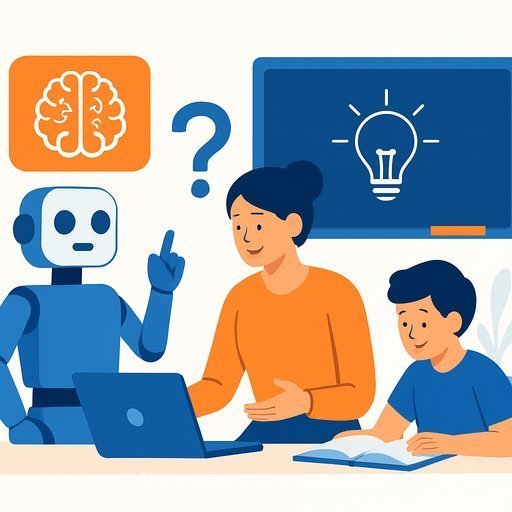
Government sets next-academic-year target to bring AI into classrooms, labs, and training centers
The Ministry of Education has set an ambitious goal: make AI tools part of teaching and learning from kindergarten through research by the next academic year. On Wednesday (December 11, 2026), Union Education Minister Dharmendra Pradhan met founders from 10 leading AI-driven ed-tech start-ups at IIT Delhi, ahead of the Bharat Bodhan AI Conclave kicking off on Thursday (December 12).
Officials said the government will launch Bodhan AI during the conclave. The initiative is expected to serve as digital public infrastructure for education, giving start-ups reliable APIs to build and deliver AI applications for students, teachers, and institutions.
Bodhan AI: Building blocks for a public-good AI ecosystem in education
As described by officials, Bodhan AI will act like a common platform-a foundation layer with APIs that start-ups can plug into to create secure, interoperable tools. Think lesson-planning assistants for teachers, adaptive assessments for students, and admin dashboards that reduce routine workload; user-centered Design will be critical for adoption.
The intent is to lower time-to-deployment for useful products, encourage innovation, and keep costs reasonable for public systems.
From AI in curricula to AI that delivers results
Mr. Pradhan noted the shift from teaching "about AI" to deploying AI-assisted applications across the system, with a clear push for "AI-sovereignty." Immediate use cases include teacher capacity building and personalised lesson plans built on content already produced by NCERT and State Councils.
With devices and connectivity reaching remote regions, the next step is clear: use AI to get high-quality, contextual content to every learner. Officials also flagged AI's role in skilling and upskilling programs at scale, and said policy choices should be guided by ongoing applied AI Research.
What start-ups presented at the IIT Delhi roundtable
Founders from platforms like Arivihan and Vedantu showcased AI features that act as companions in learning. Arivihan's team described an AI tutor that helps students plan lessons, take assessments, and get corrections with useful suggestions.
Vedantu's founders walked through progress on their assistant, VED-capable of attending classes with learners, answering doubts in real time, reviewing subjective responses, and creating personalised quizzes. As Pulkit Jain put it, the assistant aims to offer focused attention-sometimes better than a traditional teaching assistant.
Why this matters for government stakeholders
The roundtable-also attended by Skill Development Minister Jayant Chaudhary-feeds directly into policy and ecosystem discussions at the upcoming India AI Impact Summit. The Ministry underscored responsible AI adoption, safeguards, and clear pathways to scale across sectors, education included.
Mr. Pradhan encouraged founders to build solutions suited to Indian values, languages, and needs, while staying globally relevant. He assured continued support to put AI's transformative potential to work for national education and skilling priorities-and to advance technological and digital sovereignty through strong public infrastructure.
Action checklist for departments and institutions
- Set a clear AI policy baseline: privacy-by-design, consent for minors, auditability, explainability, and bias checks.
- Prepare your content backbone: map NCERT/SCERT materials and local resources for lesson plan generation and aligned assessments.
- Plan teacher enablement: short-format training for AI-assisted lesson planning, feedback, and assessment workflows.
- Demand interoperability: require API-first tools and open standards for data portability and system integration.
- Start with focused pilots: define 2-3 high-impact use cases (e.g., remedial support, formative assessment, teacher PD), then scale based on evidence.
- Budget for maintenance, not just procurement: include continuous model updates, monitoring, and support in contracts.
- Build in safety nets: content filters, age-appropriate responses, and grievance-redress channels for students and teachers.
- Measure outcomes: track learning gains, teacher time saved, and cost per learner-report quarterly to guide scale-up decisions.
- Language inclusion: prioritize tools that work in regional languages and handle code-switching common in classrooms.
- Infrastructure check: ensure offline/low-bandwidth modes where connectivity is patchy.
What to expect at the Bharat Bodhan AI Conclave
Over the next two days, start-ups will present prototypes and working products, with government, academia, and industry weighing in on deployment paths. Expect practical discussions about safeguards, sandbox testing, and how Bodhan AI can make it easier to roll out proven tools nationwide.
Resources
For teams planning AI upskilling
If you're setting up internal training for educators or administrators, you can explore curated AI courses by job role here: Complete AI Training - Courses by Job.
Your membership also unlocks: